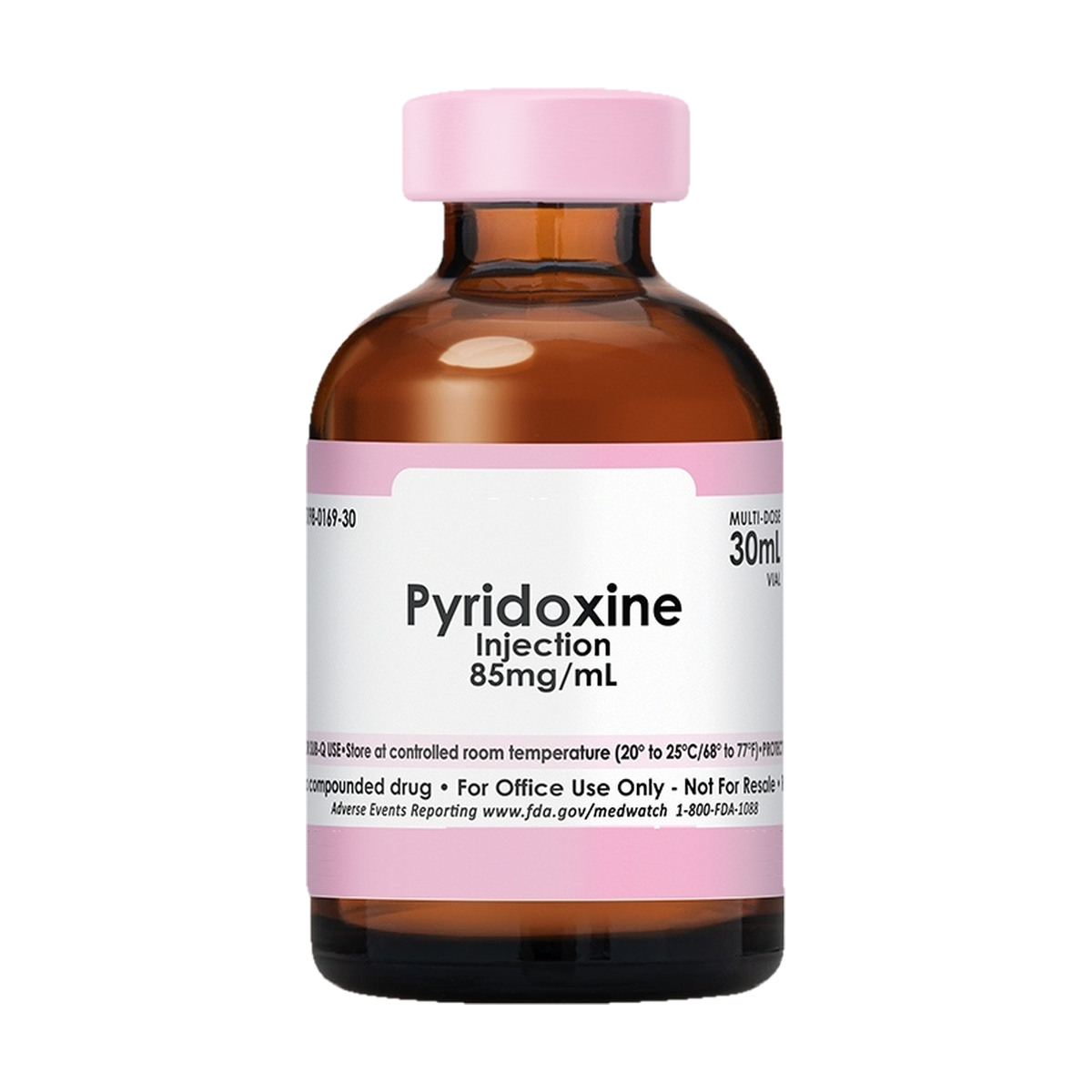
Vitamin B6 at 85mg/mL supports amino acid metabolism, neurotransmitter synthesis (serotonin, dopamine, GABA), and red blood cell production. Available as a compounded alternative during periods of commercial drug shortage.
Pyridoxine hydrochloride (Vitamin B6) is an essential water-soluble B-vitamin that the body cannot produce on its own. Once absorbed, it converts to its active form, pyridoxal phosphate (PLP), which participates in over 100 enzymatic reactions including amino acid metabolism, neurotransmitter synthesis, hemoglobin production, and immune function. Injectable pyridoxine delivers B6 directly into the bloodstream, bypassing any absorption limitations at the gut level and providing the rapid systemic availability needed in clinical settings.
Pyridoxine has been on the FDA drug shortage list for several years — commercial supply is inconsistent. Compounded Pyridoxine provides a reliable clinical alternative. At 85mg/mL, it supports neurotransmitter synthesis (serotonin, dopamine, GABA), amino acid metabolism, and hemoglobin production across IV and clinical protocols.
| Specification | Detail |
|---|---|
| Concentration | 85 mg/mL |
| Route | IV, IM, or SQ |
| Storage | Room temperature; protect from light |
Neurotransmitter production: A required coenzyme for synthesizing serotonin, dopamine, and GABA — the primary neurotransmitters regulating mood, sleep, and neurological function.
Amino acid metabolism: Supports the breakdown and synthesis of amino acids — foundational to protein production throughout the body.
Hemoglobin support: Required for hemoglobin synthesis — deficiency contributes to B6-responsive anemia.
Drug shortage solution: Commercial pyridoxine injection supply has been unreliable for years — compounded pyridoxine provides consistent access for practices that need it.
Practices offering Pyridoxine Injection often combine it with Methylcobalamin B12 Injection, Hydroxocobalamin B12 Injection, Ascorbic Acid Injection, and Magnesium Chloride Injection as part of a comprehensive B-vitamin and micronutrient IV protocol.
High-stakes interactions: Pyridoxine reduces the effectiveness of altretamine chemotherapy (when combined with cisplatin) and levodopa (Parkinson’s medication). Full medication review required. With prolonged high-dose use, sensory neuropathy has been reported — monitor accordingly.
This is a compounded Rx product. Compounded drugs are not FDA-approved. Rx only. For use by or on the order of a licensed healthcare provider.
Is a prescription required? Yes. Available exclusively to licensed healthcare providers and medical practices.
Why is compounded pyridoxine available? Commercial pyridoxine injection has been on the FDA drug shortage list for years. Compounded pyridoxine provides a consistent clinical alternative.
What are the most important drug interactions? Reduces effectiveness of altretamine chemotherapy with cisplatin, and levodopa in Parkinson’s patients. Full medication review required before initiating.
What pairs well with Pyridoxine? Methylcobalamin B12, Hydroxocobalamin B12, Ascorbic Acid, and Magnesium Chloride as part of a B-vitamin and micronutrient IV protocol.

Schedule a no obligation/no-pressure call to quickly increase your weight loss clinic’s revenue.