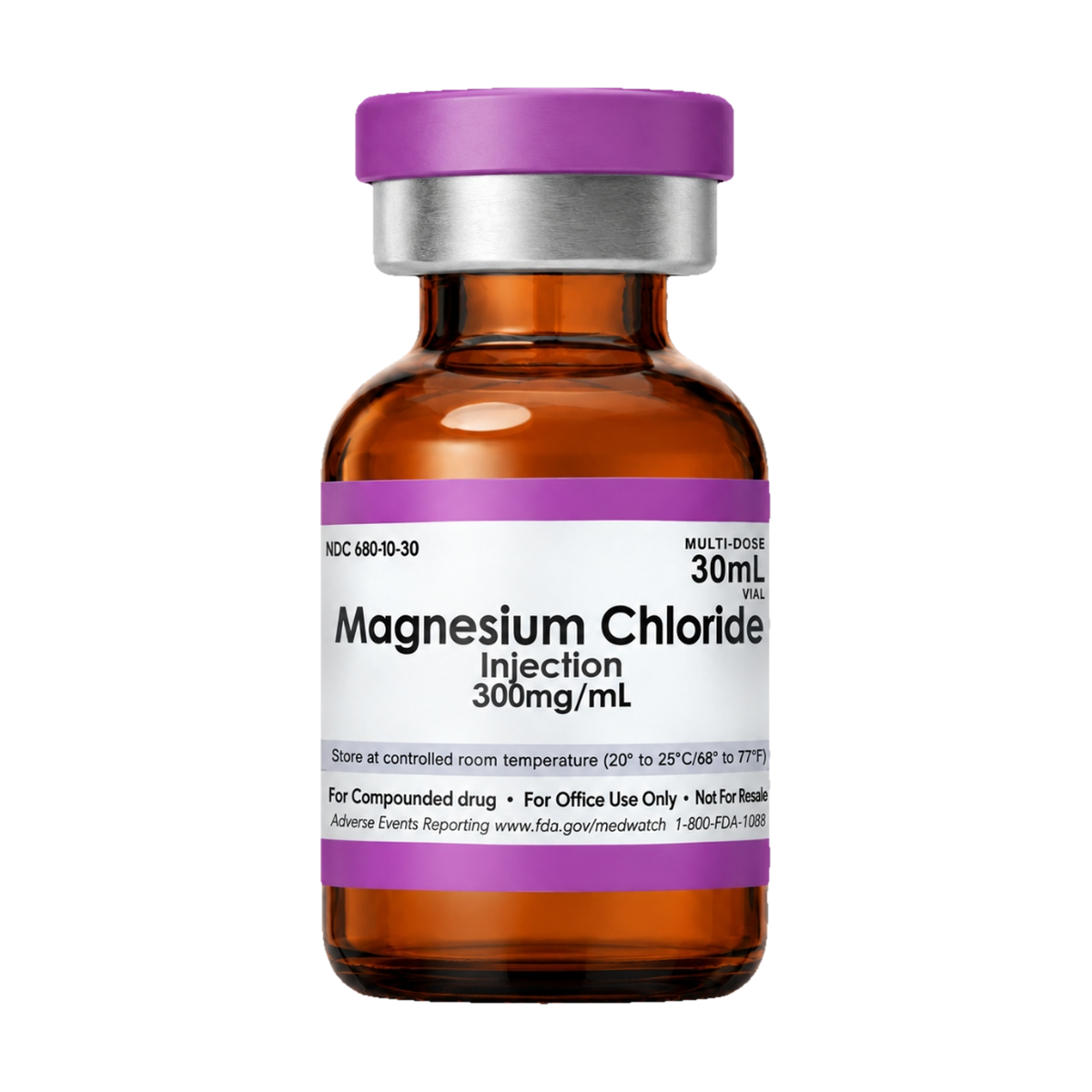
Magnesium Chloride Injection 300mg/mL for licensed IV therapy, wellness, and medical practices. Injectable magnesium for deficiency correction, muscle function, stress, sleep, cardiovascular health, and migraine support.
Magnesium Chloride at 300mg/mL is an injectable magnesium solution for licensed practices administering IV therapy to address magnesium deficiency and its wide range of clinical manifestations. Magnesium is the second most common nutrient deficiency in the United States and is involved in over 300 enzymatic reactions — including energy production, glucose metabolism, muscle and nerve function, and bone health. Deficiency contributes to muscle cramps, fatigue, poor sleep, anxiety, high blood pressure, migraine headaches, and insulin resistance. Injectable magnesium bypasses the GI absorption limitations of oral supplementation, making it an important clinical tool for practices managing patients with significant deficiency or those who need rapid repletion.
| Specification | Detail |
|---|---|
| Concentration | 300 mg/mL |
| Route | IV (confirm IM applicability with Legere) |
| Storage | Room temperature, protected from light |
Legere supplies licensed medical practices with a range of quantities to fit your volume needs. To get pricing, check availability, or place an order, click Request a Quote above or contact our team directly. A valid medical or pharmacy license is required to purchase prescription and injectable products.
Magnesium deficiency is widespread because modern diets are low in the foods that contain it — nuts, seeds, fatty fish, dark chocolate, leafy greens — while common lifestyle factors accelerate depletion. Alcohol, caffeine, diuretics, poorly controlled diabetes, high-stress lifestyles, and processed food diets all increase magnesium losses. Many patients presenting to wellness, IV therapy, and functional medicine practices are already deficient without knowing it.
The clinical consequences are significant: low magnesium contributes to fatigue, muscle cramps and weakness, poor sleep quality, anxiety and irritability, elevated blood pressure, irregular heart rhythms, migraine headaches, and worsened insulin resistance and blood sugar control. Oral magnesium has limited bioavailability — particularly magnesium oxide, which is poorly absorbed. Injectable magnesium delivers directly to the bloodstream, bypassing GI absorption limitations entirely.
IV therapy and wellness clinics: Magnesium is one of the most commonly included components in Myers’ Cocktail and general wellness IV protocols. Practices offering IV therapy use Magnesium Chloride as a standard add-on or standalone infusion for patients presenting with fatigue, muscle tension, stress, or sleep issues.
Functional and integrative medicine practices: Magnesium deficiency is a root cause finding in many functional medicine workups — contributing to metabolic syndrome, insulin resistance, poor sleep, and anxiety. Injectable magnesium provides rapid repletion for patients with confirmed deficiency.
Migraine and headache practices: Low magnesium is specifically linked to migraine frequency and severity. IV magnesium is among the best-studied nutritional interventions for reducing migraine frequency in patients with low serum magnesium.
Weight loss and metabolic health practices: Magnesium is essential for insulin sensitivity and glucose metabolism. GLP-1 and medical weight loss patients with reduced food intake are at elevated risk of deficiency — injectable magnesium supports the metabolic environment that makes weight loss programs effective.
NAD+ Injection — Magnesium supports the enzymatic reactions that NAD+ drives — a natural pairing in longevity and energy-focused IV protocols.
Glutathione Injection — Antioxidant and detox support alongside magnesium repletion in comprehensive wellness IV programs.
Ascorbic Acid Injection — Vitamin C is a frequent IV pairing with magnesium in Myers’-style cocktail protocols.
Kato Plus Caps — For practices that provide IV magnesium in-office and want patients to maintain oral magnesium and potassium support between visits.
Kidney disease: Magnesium is renally cleared. Contraindicated in patients with significant kidney impairment or hypermagnesemia. Use with caution and monitoring in patients with reduced kidney function.
Myasthenia gravis and muscle disorders: Magnesium can worsen neuromuscular blockade. Contraindicated in myasthenia gravis and progressive muscle weakness associated with carcinoma.
Hypocalcemia: Magnesium infusion can lower calcium levels. Correct hypocalcemia before administering magnesium.
Blood pressure: Magnesium has vasodilatory effects. May cause a significant drop in blood pressure — monitor during infusion and have patients remain reclined for infusion.
Drug interactions: Magnesium has numerous drug interactions. Review concurrent medications before administering — particularly aminoglycosides, neuromuscular blockers, and digoxin.
Prescription required. A valid medical or pharmacy license is required to purchase.
How do I order, and what quantities are available?
Contact our team directly to place an order or request a quote. Reach out for current availability, vial sizes, lead times, and volume pricing. A valid medical or pharmacy license is required.
Why use injectable magnesium instead of oral supplements?
Oral magnesium — especially oxide forms — has poor and variable GI absorption. IV magnesium bypasses the GI tract entirely, delivering 100% of the dose directly to the bloodstream. For patients with significant deficiency, malabsorption conditions, or those needing rapid repletion, injectable magnesium is significantly more effective than oral supplementation at comparable doses.
What conditions benefit most from IV magnesium?
Magnesium deficiency is found across a wide range of common presentations: fatigue, muscle cramps, poor sleep, anxiety, migraine headaches, elevated blood pressure, and insulin resistance. Practices report it as one of the most impactful single-nutrient interventions in an IV therapy menu, particularly for patients who present with several of these complaints simultaneously.
This is a prescription injectable product. A valid medical or pharmacy license is required to purchase. For use by licensed healthcare providers only.

Schedule a no obligation/no-pressure call to quickly increase your weight loss clinic’s revenue.