Hydroxocobalamin Injection

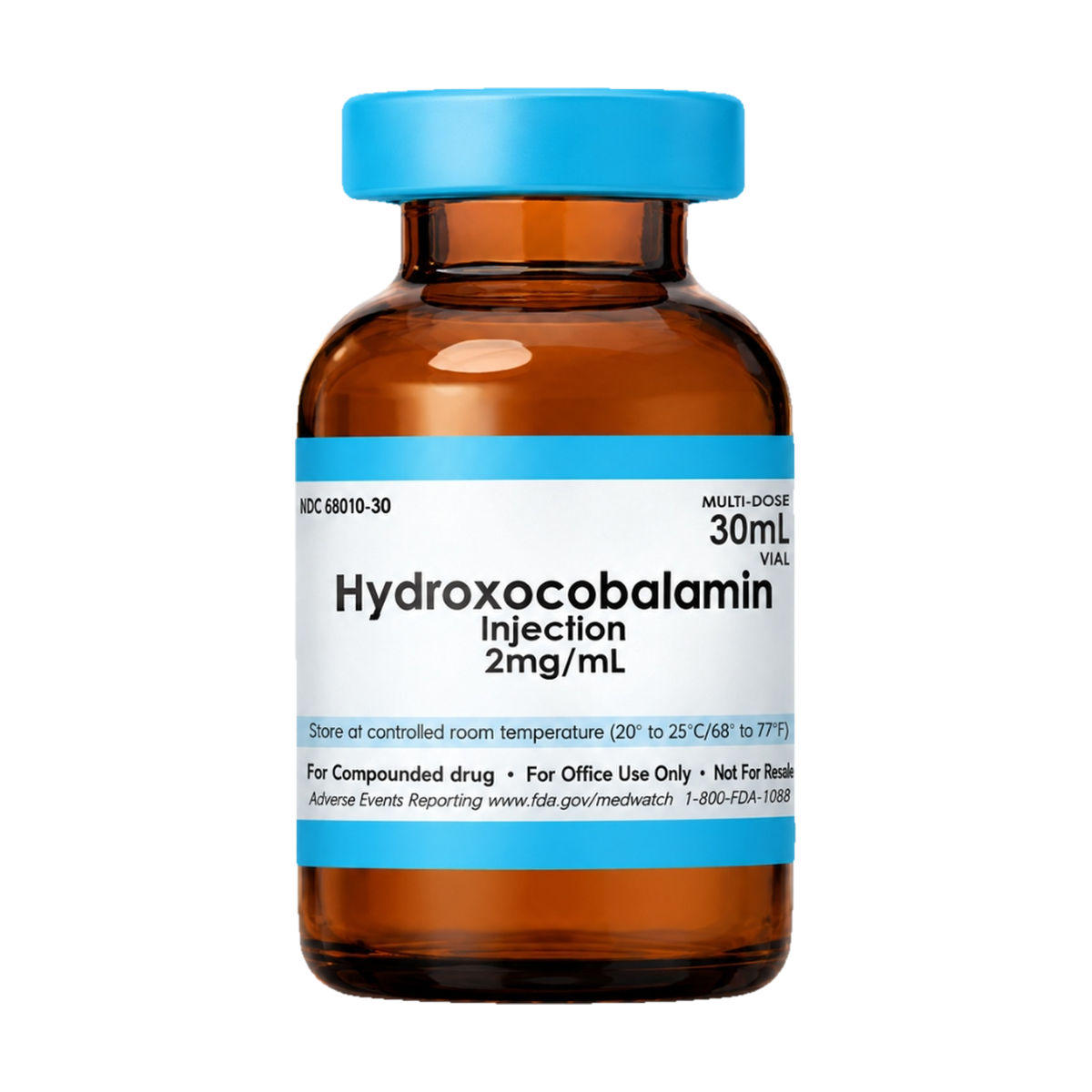
A naturally occurring, long-acting form of Vitamin B12 at 2mg/mL with a longer half-life than cyanocobalamin. Supports energy metabolism, myelin health, and red blood cell production via IV, IM, or SQ.

SHARE THIS PRODUCT:

Hydroxocobalamin B12 Injection: Vitamin B12 at 2mg/mL

Coenzyme Q10 (CoQ10) is a fat-soluble antioxidant produced naturally in nearly every cell of the human body, with the highest concentrations found in the heart, liver, kidneys, and skeletal muscle — tissues with the highest energy demands. It plays a central role in the mitochondrial electron transport chain, the process by which cells convert nutrients into usable energy (ATP). CoQ10 levels decline naturally with age and can be further reduced by certain medications, particularly statins. Injectable delivery in an MCT (Medium Chain Triglycerides) oil base provides significantly better absorption than standard oral supplementation, which is notoriously variable due to CoQ10’s poor water solubility.

Formula

SpecificationDetail
Active ingredientHydroxocobalamin (Vitamin B12)
Concentration2 mg/mL
RouteIV, IM, or SQ
StorageControlled room temperature; protect from light

Hydroxocobalamin vs. Other B12 Forms

Vitamin B12 injectables are available in three main forms. Understanding the distinctions helps providers select the appropriate option for their protocols:

Hydroxocobalamin: A naturally occurring form that converts to both methylcobalamin and adenosylcobalamin in the body. Has a longer half-life than cyanocobalamin, meaning it stays active in the body longer per dose. Does not contain a cyanide molecule. Often preferred for patients with renal impairment or those seeking a non-synthetic form.

Methylcobalamin: The active, neurologically bioavailable form of B12. Converts directly without additional metabolic steps. Commonly used in neurological support protocols and for patients with MTHFR gene variants affecting methylation.

Cyanocobalamin: The synthetic form most commonly found in OTC supplements. Requires metabolic conversion and releases a small amount of cyanide during that process, which the body readily handles at standard doses but is a consideration for patients with renal impairment or known cyanide sensitivity.

For general B12 deficiency correction and IV therapy protocols, hydroxocobalamin’s longer half-life and naturally occurring structure make it a strong clinical choice.

Clinical Role of Vitamin B12

B12 is essential to several physiological systems:

Energy metabolism: B12 is required for the conversion of fats and carbohydrates into usable cellular energy. B12 deficiency is closely associated with fatigue and weakness.

Red blood cell production: B12 is essential to DNA synthesis in rapidly dividing cells, particularly red blood cells. Deficiency leads to megaloblastic anemia, characterized by large, abnormally formed red blood cells that function poorly.

Nerve function and myelin production: B12 supports the production and maintenance of myelin, the protective sheath surrounding nerve fibers. Deficiency can cause progressive neurological damage if untreated.

Homocysteine metabolism: B12, alongside folate and B6, is required for the conversion of homocysteine to methionine. Elevated homocysteine is associated with cardiovascular and neurological risk.

B12 Deficiency: Who Is at Risk?

Vitamin B12 deficiency is more prevalent than commonly recognized, particularly in:

  • Patients over 50 (reduced gastric acid production impairs absorption)
  • Vegans and strict vegetarians (B12 is found almost exclusively in animal products)
  • Patients with pernicious anemia (autoimmune condition eliminating intrinsic factor needed for B12 absorption)
  • Post-bariatric surgery patients (reduced stomach acid and intrinsic factor)
  • Long-term metformin users (metformin reduces B12 absorption)
  • Patients with Crohn’s disease, celiac disease, or other GI malabsorption conditions
  • Heavy alcohol users
  • Patients on prolonged proton pump inhibitor (PPI) therapy

Deficiency symptoms range from fatigue and anemia in mild cases to serious neurological effects including memory problems, depression, poor muscle function, ataxia, and changes in reflexes with prolonged deficiency. Infertility has also been associated with insufficient B12 levels.

Benefits

  • Supports correction of B12 deficiency and associated symptoms
  • Supports energy production via fat and carbohydrate metabolism
  • Supports red blood cell production and healthy anemia prevention
  • Supports nerve function and myelin maintenance
  • Longer half-life than cyanocobalamin, supporting sustained B12 levels between doses
  • Compatible with weight management protocols as a metabolic support component

Dosage

Dosage should be determined by the ordering provider based on the patient’s B12 levels, clinical presentation, and therapeutic goals. Standard deficiency correction protocols and maintenance dosing differ; consult current clinical guidelines and state prescribing requirements.

Precautions and Contraindications

Leber’s disease (hereditary optic neuropathy): Hydroxocobalamin is contraindicated in patients with Leber’s disease. This inherited condition causes degeneration of the optic nerve, and B12 can accelerate this deterioration in affected patients. Screen patients for this condition before initiating hydroxocobalamin.

Hypokalemia (low potassium): Hydroxocobalamin is contraindicated in patients with low blood potassium levels. B12 therapy can further reduce potassium as red blood cell production increases. Monitor potassium levels closely, particularly during initial treatment.

Additional contraindications: Known allergy to Vitamin B12, cobalt, or any components of the formulation.

Drug interactions worth reviewing:

  • Chloramphenicol and anticancer/HIV drugs may affect blood cell production and interact with B12 therapy
  • Folic acid and other B-vitamin supplements may mask or complicate B12 deficiency assessment
  • Certain anti-infective drugs (amoxicillin, erythromycin) may interfere with lab tests for B12 levels; inform laboratory personnel of current medications before testing

Special populations:

  • Patients with gout, polycythemia vera, or other blood disorders should be evaluated before initiating
  • Pregnancy and breastfeeding: discuss benefits and risks with appropriate clinical specialists

Common side effects: Pain at the injection site, mild diarrhea, itching, feeling of body swelling, low potassium, and elevated blood pressure have been reported.

As a compounded Rx product, Hydroxocobalamin Injection has not been evaluated by the FDA for safety, efficacy, or quality. Administer only under the supervision of a licensed healthcare provider in accordance with current clinical and state regulatory guidelines.

Who It’s For

  • Medical weight loss and metabolic health clinics incorporating B12 as a metabolic support component
  • IV therapy and wellness clinics building out a comprehensive B-vitamin injectable menu
  • Primary care and internal medicine providers managing B12 deficiency in high-risk patient populations
  • Integrative and functional medicine providers supporting homocysteine metabolism and neurological health

Pairs Well With

Practices offering Hydroxocobalamin B12 Injection often combine it with Lipo-Mino-C, Biotin Injection, Ascorbic Acid Injection, and Glutathione Injection as part of a comprehensive IV nutrition and wellness protocol.

FAQ

Is a prescription required to order Hydroxocobalamin Injection?
Yes. Hydroxocobalamin Injection is a compounded Rx product dispensed exclusively to licensed healthcare providers and medical practices. It is not available for direct patient purchase.

What is the concentration and route of administration?
2mg/mL, available for IV, IM, or SQ administration. Route and dosing protocol are determined by the ordering provider’s clinical judgment.

How does Hydroxocobalamin differ from Methylcobalamin or Cyanocobalamin B12?
Hydroxocobalamin is a naturally occurring form with a longer half-life than cyanocobalamin, meaning it stays active longer per dose. It converts to both active B12 forms in the body. Methylcobalamin is the neurologically active form, often preferred for neurological support. Cyanocobalamin is the synthetic standard form. Hydroxocobalamin is often preferred for patients with renal impairment or those seeking a non-synthetic option.

What is the most important contraindication for Hydroxocobalamin?
Leber’s disease (hereditary optic neuropathy) is a specific contraindication for hydroxocobalamin, as B12 can accelerate optic nerve deterioration in affected patients. Low potassium (hypokalemia) is also a contraindication. Screen patients for both before initiating.

What other injectables pair well with Hydroxocobalamin B12?
Providers often combine Hydroxocobalamin with Lipo-Mino-C, Biotin, Ascorbic Acid, and Glutathione as part of a complete IV nutrition and wellness protocol.

This is a compounded medication. Compounded drugs are not FDA-approved and have not been evaluated by the FDA for safety, efficacy, or quality. This product is available by prescription only and is intended for use by or on the order of a licensed healthcare provider.

Legere: Your Partner in Success

Helpful In-Depth Research and Information

Top Quality Health Supplements Branded for Your Practice

Expert Guidance to help You Grow Your Medical Practice

Ready to Start Growing Your Practice? Let’s Chat!

Schedule a no obligation/no-pressure call to quickly increase your weight loss clinic’s revenue.