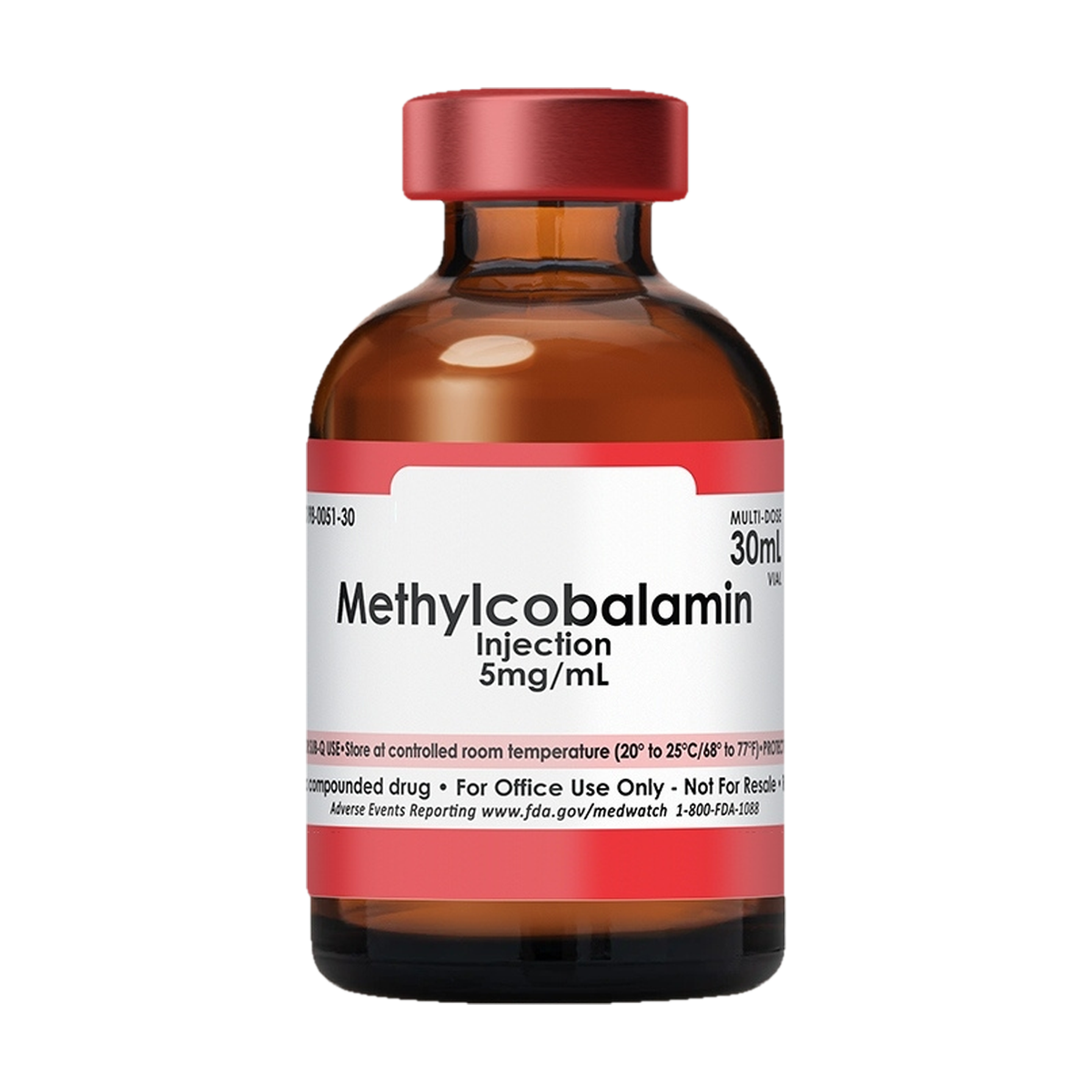
Methylcobalamin Injection 5mg/mL — the most bioavailable form of Vitamin B12 for medical and wellness practices. Energy, nerve health, B12 deficiency, and metabolic support via IV, IM, or SQ administration.
Methylcobalamin is the active, coenzyme form of Vitamin B12 — the form the body uses directly in cellular processes without requiring conversion. At 5mg/mL, Legere’s Methylcobalamin Injection delivers a high-potency dose through IV, IM, or SQ administration, bypassing the GI absorption challenges that limit oral B12 supplementation in many patients. B12 is essential for every cell’s energy metabolism, neurological function, red blood cell production, and DNA synthesis — deficiency causes fatigue, neurological damage, anemia, and cognitive impairment that can become irreversible if not corrected. For licensed medical, weight loss, hormone, and IV therapy practices, injectable methylcobalamin is a versatile and high-demand product.
| Specification | Detail |
|---|---|
| Active ingredient | Methylcobalamin (active Vitamin B12) |
| Concentration | 5 mg/mL |
| Route | IV / IM / SQ |
| Storage | Room temperature, protected from light |
Legere supplies licensed medical practices with a range of quantities to fit your volume needs. To get pricing, check availability, or place an order, click Request a Quote above or contact our team directly. A valid medical or pharmacy license is required to purchase prescription and injectable products.
Both are forms of Vitamin B12, but they differ in how the body uses them. Cyanocobalamin — the synthetic form found in most low-cost B12 supplements — must be converted to methylcobalamin or adenosylcobalamin before the body can use it. This conversion step requires enzymatic activity that may be reduced in patients with MTHFR gene variants, liver conditions, or metabolic dysfunction.
Methylcobalamin is already in the active coenzyme form — the body can use it immediately without conversion. For patients with absorption or conversion challenges, methylcobalamin produces more reliable and complete B12 repletion. It is also the primary form stored in the liver and involved in neurological function — the form most relevant for neurological protection and nerve health.
Injectable B12 is appropriate when oral supplementation is insufficient or when rapid repletion is needed. Key patient populations:
Medical weight loss and GLP-1 practices: A standard component of lipotropic injection programs and a standalone B12 shot for energy and metabolism support. Metformin co-prescription with GLP-1 makes B12 monitoring and repletion particularly relevant.
IV therapy and wellness clinics: B12 is one of the most requested IV and IM injections in wellness settings. Methylcobalamin is the preferred form for practices that want to offer the most bioavailable and neurologically active B12 formulation.
BHRT and hormone practices: B12 supports the methylation reactions that regulate hormone metabolism and clearance. It is often included in comprehensive hormone support protocols alongside other B vitamins.
Functional and integrative medicine practices: B12 testing is standard in functional medicine panels, and deficiency correction is among the most impactful single-nutrient interventions for fatigue, mood, and cognitive function.
MICC Injection — MICC contains cyanocobalamin for energy support. Methylcobalamin can be offered as a standalone higher-potency active B12 add-on for patients who want the most bioavailable form.
NAD+ Injection — B12 and NAD+ both support cellular energy production through complementary mechanisms — a natural pairing in longevity and energy-focused IV protocols.
Rodex Forte Caps — For practices that provide injectable B12 in-office and want patients to maintain oral B6, B12, and folate support between visits.
Be-Thin Lipotropic Spray — Be-Thin contains methylcobalamin as its B12 form; Methylcobalamin Injection is the same active form at clinical injectable concentrations.
Leber’s disease: Methylcobalamin is contraindicated in patients with Leber’s hereditary optic neuropathy — B12 can cause rapid optic atrophy in these patients.
Polycythemia and blood conditions: B12 corrects megaloblastic anemia; in patients with polycythemia vera, B12 repletion without managing the underlying condition requires provider oversight.
Folate interaction: High-dose B12 without adequate folate can mask certain hematological findings. B12 and folate should be assessed together.
Drug interactions: Metformin, PPI medications, H2 blockers, antibiotics (particularly chloramphenicol), and some anticonvulsants affect B12 absorption and metabolism. Review concurrent medications.
Prescription required. A valid medical or pharmacy license is required to purchase.
How do I order, and what quantities are available?
Contact our team directly to place an order or request a quote. Reach out for current availability, vial sizes, lead times, and volume pricing. A valid medical or pharmacy license is required.
Why is methylcobalamin better than cyanocobalamin for some patients?
Cyanocobalamin must be converted to methylcobalamin before the body can use it. Patients with MTHFR variants, liver conditions, or metabolic dysfunction may have reduced conversion efficiency. Methylcobalamin is already in the active form — the body uses it directly, producing more reliable repletion in patients where conversion is impaired.
Why do patients on metformin need B12 monitoring and supplementation?
Metformin blocks calcium-dependent B12 absorption in the small intestine — a well-documented side effect that causes measurable B12 depletion over time. Long-term metformin users can develop significant B12 deficiency with neurological consequences. Injectable methylcobalamin bypasses the absorption mechanism metformin blocks entirely.
This is a prescription injectable product. A valid medical or pharmacy license is required to purchase. For use by licensed healthcare providers only.

Schedule a no obligation/no-pressure call to quickly increase your weight loss clinic’s revenue.