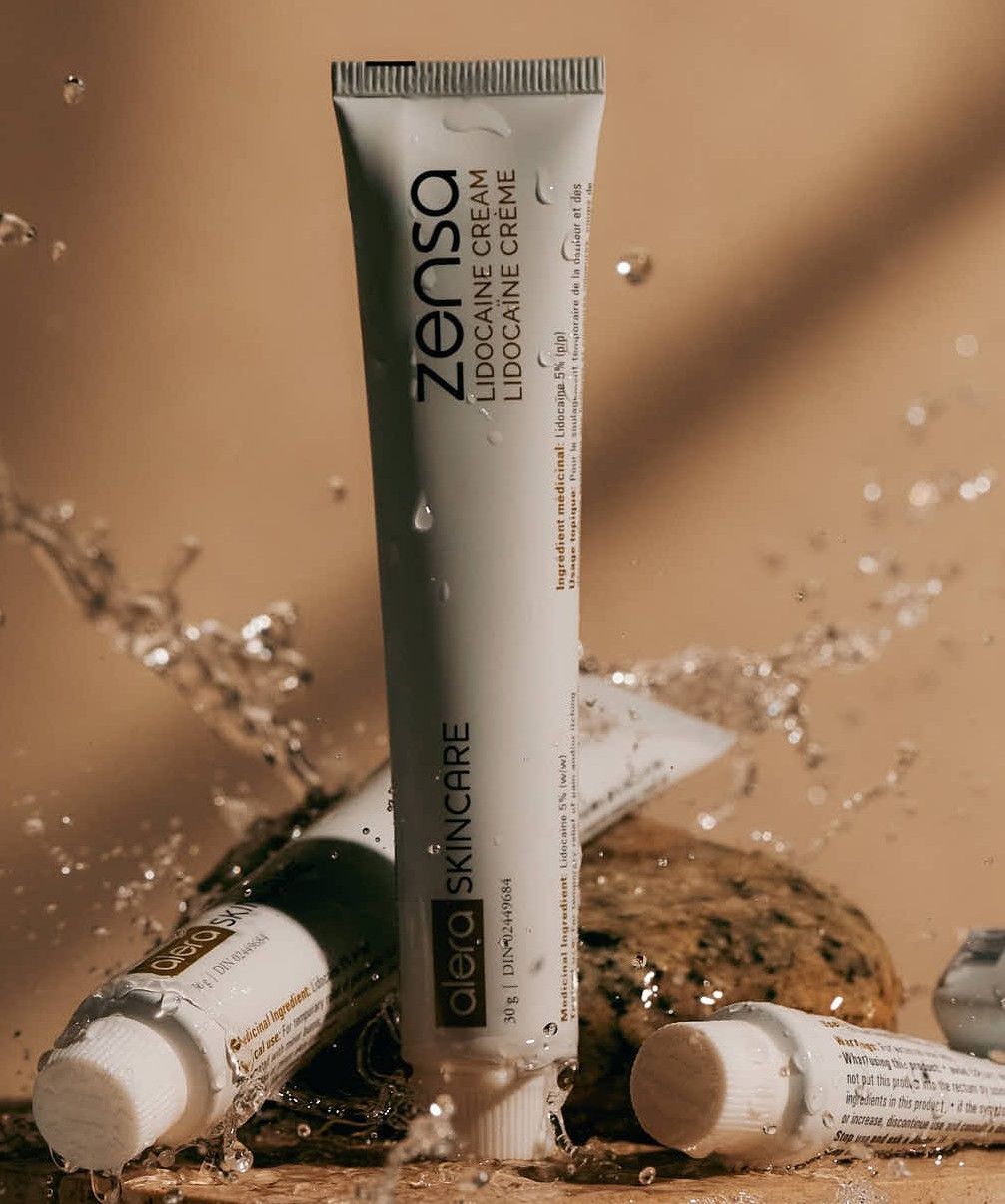
Zensa Numbing Cream — 5% lidocaine topical anesthetic for licensed aesthetic and clinical practices. Pre-procedure numbing for microneedling, laser, filler, tattoo, and aesthetic treatments.
Zensa Numbing Cream is a 5% lidocaine topical anesthetic designed for pre-procedure skin numbing in aesthetic and clinical settings. Applied to intact skin before a procedure, it reduces surface sensation and improves patient comfort during microneedling, laser treatments, injectable filler, tattoo work, and other procedures where topical numbing is part of the preparation. Zensa is formulated without epinephrine, which means it does not cause vasoconstriction — a clinically relevant distinction for practices where maintaining normal skin color and blood flow during treatment matters.
| Specification | Detail |
|---|---|
| Active ingredient | Lidocaine 5% |
| Epinephrine | None |
| Application | Topical — to intact skin only |
| Onset | Approximately 20-30 minutes under occlusion |
| Storage | Room temperature; away from heat |
| For | Licensed medical and aesthetic practices |
Legere supplies licensed medical practices with a range of quantities to fit your volume needs. To get pricing, check availability, or place an order, click Request a Quote above or contact our team directly.
Lidocaine — the active ingredient — temporarily blocks sodium channels in nerve endings near the skin surface, reducing the ability of pain signals to travel from the skin to the brain. Applied under occlusion (covered with plastic wrap or a film dressing) for 20-30 minutes before a procedure, it creates a meaningful reduction in surface sensation that makes needle-based and energy-based aesthetic treatments more comfortable for patients.
The 5% concentration is the highest lidocaine concentration available in topical form for pre-procedure use. At this concentration, Zensa delivers clinical-grade numbing that patients — and practitioners — notice.
Many compounded topical anesthetics add epinephrine to extend duration and reduce bleeding at the treatment site. Epinephrine causes vasoconstriction — it narrows blood vessels and temporarily blanches the skin. For some procedures this is useful. For others it is a problem.
In microneedling, laser, and aesthetic injection practices, treating blanched skin creates a distorted view of the actual skin tone and reaction. Zensa’s epinephrine-free formulation avoids this, allowing practitioners to assess true skin response during treatment without the confounding effect of vasoconstriction.
Aesthetic and med spa practices: Zensa is a staple pre-procedure product for microneedling, laser resurfacing, radiofrequency treatments, injectable filler, and lip procedures. Practices that prioritize patient comfort as part of the treatment experience use topical numbing as a standard part of their pre-treatment protocol — not an optional add-on.
Tattoo and body art studios operated by licensed practitioners: Pre-procedure numbing for tattoo work and permanent makeup. Zensa is widely used in this context because it numbs without affecting skin texture or ink absorption the way some other numbing products can.
Vein care practices: Surface numbing before catheter insertion or sclerotherapy access points where patient comfort is a priority and injectable lidocaine is not being used.
Dermatology-adjacent practices: Pre-procedure numbing for biopsies, minor excisions, and laser treatments where topical anesthesia is sufficient and injectable lidocaine is not warranted.
Tretinoin Cream 0.05% and 0.1% — Aesthetic practices that prescribe tretinoin for skin renewal and perform in-office procedures like microneedling use both. Tretinoin supports long-term skin results; Zensa supports the treatment-day experience.
Lidocaine HCl Injection — For practices that use both topical and injectable lidocaine. Zensa handles surface numbing pre-procedure; injectable lidocaine is used where deeper or more complete anesthesia is needed.
Routine Skin Rescue+ Serum — Post-procedure skin barrier support for practices pairing numbing with microneedling or laser protocols. Zensa numbs the treatment; barrier serum supports recovery.
MesoDerm™ — Topical body firming cream rounding out the practice’s aesthetic topical retail offering alongside Zensa
For intact skin only: Zensa is formulated for application to unbroken skin. Do not apply to open wounds, broken skin, or mucous membranes.
Lidocaine systemic absorption: At 5% concentration, lidocaine can be absorbed through the skin — particularly when applied over large areas, left on for extended periods, or used under heavy occlusion. Excessive absorption can cause systemic lidocaine toxicity. Follow the manufacturer’s recommended application area, duration, and occlusion guidelines. Do not apply over very large surface areas simultaneously.
Allergy: Known allergy to lidocaine or other amide-type local anesthetics is a contraindication. Screen patients for prior reactions before use.
Avoid contact with eyes and mucous membranes: Keep away from the eyes, mouth, and other sensitive areas.
Children and elderly patients: Systemic absorption risk is higher in children (due to lower body weight) and elderly patients (due to reduced clearance). Use with additional caution in these populations.
Do not cover for longer than directed: Extended occlusion increases absorption. Follow recommended application times.
For use by licensed medical and aesthetic practices.
How do I order, and what quantities are available?
Contact our team directly to place an order or request a quote. We supply a range of quantities depending on the product — reach out for current availability, lead times, and volume pricing.
How long before a procedure should Zensa be applied?
Apply approximately 20-30 minutes before the procedure under occlusion — covered with plastic wrap or a similar film. Remove and wipe clean immediately before beginning treatment. Onset and depth of numbing can vary by individual and treatment area.
Why does Zensa not contain epinephrine?
Epinephrine causes vasoconstriction — it narrows blood vessels and temporarily blanches skin. For microneedling, laser, and aesthetic injection work, blanched skin distorts the practitioner’s view of the actual skin response. Zensa’s epinephrine-free formulation provides clinical numbing without affecting skin color or blood flow during treatment.
Can Zensa be used for microneedling?
Yes. It is one of the most common pre-procedure uses. Apply under occlusion for 20-30 minutes, wipe clean, and proceed with treatment. The epinephrine-free formulation is particularly well-suited to microneedling because it does not alter skin appearance or circulation before or during the procedure.
Is Zensa available for private label?
Contact our team to discuss private label options for your practice.
These statements have not been evaluated by the Food and Drug Administration. This product is not intended to diagnose, treat, cure, or prevent any disease.

Schedule a no obligation/no-pressure call to quickly increase your weight loss clinic’s revenue.