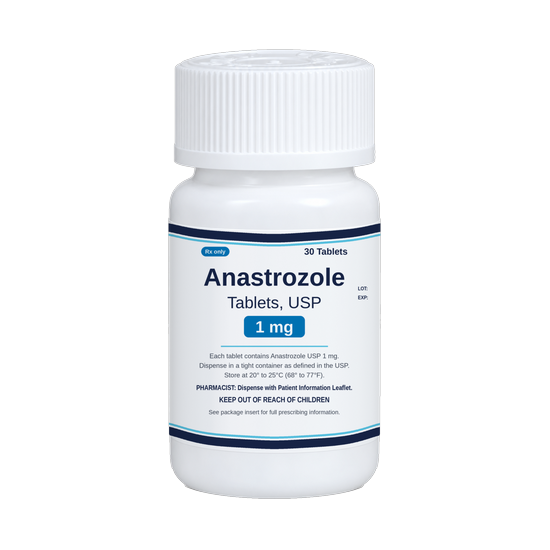
Anastrozole 1mg tablets — generic Arimidex — for licensed men’s health and TRT practices. Prescription estrogen control for testosterone replacement protocols and hormone optimization programs.
Anastrozole — generic Arimidex — is a prescription medication that reduces estrogen production by blocking aromatase, the enzyme that converts testosterone into estrogen. In men’s health and TRT practice, its primary role is managing elevated estrogen levels that commonly develop when men are on testosterone replacement therapy. Keeping estrogen in the appropriate range is a key part of a well-managed TRT protocol, and anastrozole is the most widely used tool for that purpose. Available in 1mg tablets. Rx only.
| Specification | Detail |
|---|---|
| Active ingredient | Anastrozole |
| Strength | 1 mg |
| Dosage form | Oral tablet |
| Standard dose | 1mg once daily |
| Storage | Room temperature, away from heat, moisture, and light |
| Prescription status | Rx only |
Legere supplies licensed medical practices with a range of quantities to fit your volume needs. To get pricing, check availability, or place an order, click Request a Quote above or contact our team directly. A valid medical or pharmacy license is required to purchase prescription and injectable products.
When the body has more testosterone available — whether from natural production or TRT — aromatase enzymes convert some of that testosterone into estradiol (estrogen). In men, some estrogen is normal and necessary. Too much causes problems: water retention, mood changes, reduced libido, gynecomastia (breast tissue development), and reduced effectiveness of the testosterone protocol overall.
Anastrozole blocks aromatase directly, reducing how much testosterone gets converted to estrogen. The result is lower circulating estradiol levels. The goal in TRT management is not to eliminate estrogen — it is to keep it within the optimal range where it supports bone health, cardiovascular function, and mood without causing the side effects of excess.
Dosing is guided by lab results. Estradiol should be monitored on a sensitive assay (not the standard E2 test) during TRT, and anastrozole dose adjusted based on where levels land rather than prescribed at a fixed dose for every patient.
Testosterone replacement raises testosterone levels throughout the body, including in fat tissue where aromatase activity is concentrated. Higher testosterone means more substrate for aromatase to work on, which is why many men on TRT develop elevated estradiol. The higher the testosterone dose and the higher the body fat percentage, the more aromatase activity — and the more likely estrogen management becomes necessary.
Not every TRT patient needs anastrozole. Men with leaner body composition, lower testosterone doses, or naturally lower aromatization rates may maintain estrogen in the healthy range without it. The clinical assessment — symptoms plus lab values — determines whether it is indicated.
TRT and men’s health practices: The core use case. Anastrozole is a standard component of comprehensive TRT protocols in practices that monitor estradiol and adjust protocols based on lab values. It is prescribed when estradiol rises above the patient’s optimal range, with dose adjustments guided by follow-up labs.
Hormone optimization practices: Broader hormone optimization programs that manage the full hormonal picture — not just testosterone, but the downstream effects including estrogen conversion, mood, and body composition.
Urology-adjacent practices: Anastrozole has an FDA approval for breast cancer in postmenopausal women, but its use in men is entirely off-label and driven by clinical evidence in the TRT context. Urology and endocrinology-adjacent practices managing male hypogonadism frequently include estrogen management as part of the protocol.
DHEA 25mg Capsules — Adrenal androgen precursor support. DHEA contributes to the androgen pool and can also aromatize to estrogen. Practices managing the full hormonal picture for patients on TRT may monitor DHEA alongside anastrozole management.
DIM (Diindolylmethane) — Complementary estrogen metabolism support. DIM supports healthy estrogen metabolism and clearance via phase II liver pathways, working downstream of aromatase. Some practices combine anastrozole for aromatase control with DIM for broader estrogen metabolism support.
Gonadorelin Peptide Injection — HPG axis support for TRT patients. Gonadorelin maintains endogenous LH and FSH signaling alongside exogenous testosterone; anastrozole manages the resulting estradiol. A common combination in comprehensive TRT protocols.
Tadalafil Tablets — PDE5 inhibitor for erectile function support in men’s health protocols. Tadalafil and anastrozole address different aspects of male sexual health — vascular function and hormonal balance respectively — and are commonly used together in TRT-adjacent practices.
Monitor estradiol regularly: Anastrozole’s dose should be guided by lab values, not assumed to be correct without testing. Over-suppressing estrogen in men causes its own problems — joint pain, low libido, mood changes, fatigue, and bone density loss. The goal is the optimal range, not the lowest possible number. Use a sensitive estradiol assay for accurate monitoring.
Joint and muscle pain: Anastrozole commonly causes musculoskeletal pain — joint aches, stiffness, and muscle discomfort. This is one of the most frequently reported side effects and a common reason for dose adjustment or discontinuation. Counsel patients to report new or worsening joint symptoms.
Bone density: Long-term estrogen suppression reduces bone density. This is primarily a concern with long-term use. In men on TRT who are on anastrozole, the testosterone itself partially offsets this — but bone health monitoring is appropriate for extended protocols.
Estrogen-containing products interaction: Anastrozole counteracts estrogen-containing medications. Avoid prescribing alongside estrogen therapy or estrogen-containing products in any patient for whom that matters clinically.
Handling by pregnant women: Anastrozole can harm a developing fetus through estrogen suppression. Pregnant women or those who may become pregnant should not handle anastrozole tablets. This is relevant for any practice where staff or patients who are pregnant may handle medications.
Vitamin D monitoring: Anastrozole may affect bone metabolism over time. Vitamin D levels are reasonable to monitor in patients on extended anastrozole use, particularly those with low baseline levels.
How do I order, and what quantities are available?
Contact our team directly to place an order or request a quote. We supply a range of quantities depending on the product — reach out for current availability, lead times, and volume pricing. A valid medical license is required to purchase prescription and injectable products.
Does every man on TRT need anastrozole?
No. Anastrozole is indicated when estradiol rises above the patient’s optimal range — which is determined by lab values and symptoms, not assumed for everyone on TRT. Men with leaner body composition, lower testosterone doses, or lower natural aromatization rates often maintain estrogen in range without it. The clinical assessment drives the prescription decision.
What happens if estrogen gets too low from anastrozole?
Over-suppressing estrogen causes real problems in men: joint pain, low libido, fatigue, mood changes, and reduced bone density. The clinical goal is the optimal range, not minimal estrogen. This is why regular estradiol monitoring with dose adjustment is essential — anastrozole should be titrated to lab values, not fixed at one dose indefinitely.
What is the difference between anastrozole and DIM for estrogen management?
Anastrozole is a prescription medication that blocks aromatase and directly reduces estrogen production. DIM is a supplement that supports the liver’s processing and clearance of estrogen through phase II metabolism. They work at different points in the estrogen pathway. Some practices use DIM as a milder first step or as an adjunct to anastrozole in patients where full aromatase inhibition is more than needed.
Is a prescription required?
Yes. Anastrozole is Rx only, available exclusively to licensed healthcare providers and medical practices.
For use by or on the order of a licensed healthcare provider. Off-label use in testosterone replacement and hormone optimization protocols should be guided by clinical judgment and individualized lab monitoring.

Schedule a no obligation/no-pressure call to quickly increase your weight loss clinic’s revenue.