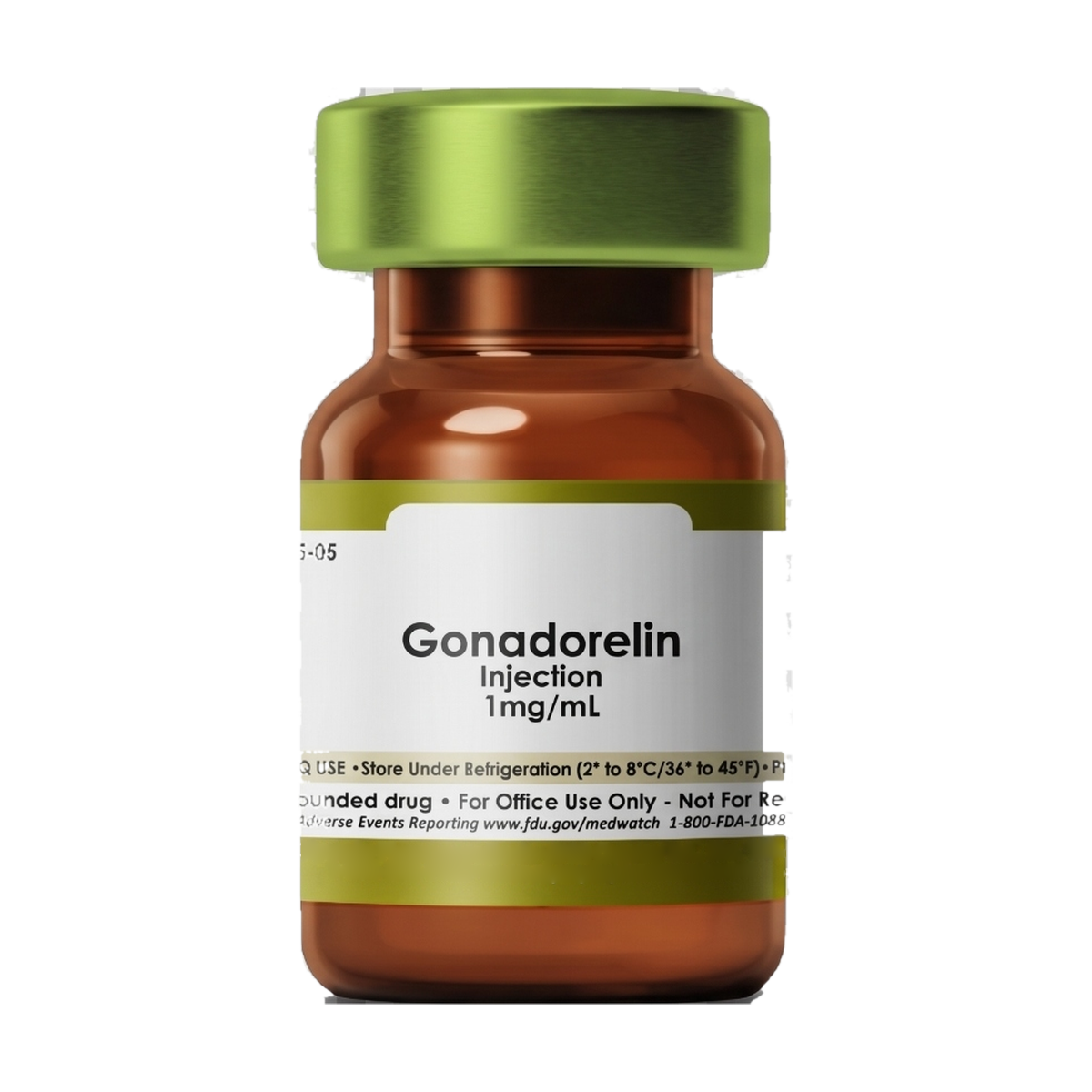
Gonadorelin at 1mg/mL is a synthetic GnRH peptide that stimulates the pituitary gland to release LH and FSH, supporting endogenous testosterone production alongside TRT. A key peptide for comprehensive hormone optimization protocols in licensed practices.
Gonadorelin is a compounded peptide analogue of gonadotropin-releasing hormone (GnRH) — the naturally occurring peptide produced by the hypothalamus that signals the pituitary gland to release luteinizing hormone (LH) and follicle-stimulating hormone (FSH). When patients are on exogenous testosterone, the body’s natural GnRH signaling shuts down through negative feedback. Gonadorelin peptide keeps the HPG axis signaling — stimulating the pituitary to continue releasing LH and FSH, which in turn signals the testes to maintain their own testosterone production and spermatogenesis.
| Specification | Detail |
|---|---|
| Active ingredient | Gonadorelin (synthetic GnRH peptide) |
| Concentration | 1 mg/mL |
| Volume | 5mL |
| Route | IV, IM, or SQ |
| Storage | Refrigerate; protect from light |
When testosterone is administered exogenously, the hypothalamic-pituitary-gonadal (HPG) axis detects elevated androgen levels and reduces its own GnRH output — the body’s feedback mechanism for preventing overproduction. Without GnRH stimulation, the pituitary stops releasing LH and FSH, and the testes stop producing testosterone and sperm. Gonadorelin peptide provides the upstream GnRH signal that prevents this cascade, maintaining testicular function throughout TRT.
This distinguishes Gonadorelin from other approaches to TRT support. Rather than supplementing the downstream hormones (HCG stimulates LH receptors directly), Gonadorelin works at the top of the HPG axis — the most physiologically natural point of intervention in the hormonal cascade.
By providing exogenous GnRH stimulation through Gonadorelin, this natural signaling pathway can be maintained or supported alongside testosterone therapy. The result is continued stimulation of testicular function, which may help preserve testicular volume, support spermatogenesis, and maintain the body’s own contribution to testosterone production during TRT.
Sermorelin Peptide Injection — The most natural peptide pairing in the catalog. Gonadorelin supports the HPG axis (testosterone pathway), Sermorelin supports the GH axis (growth hormone pathway). Together they address the two primary hormonal cascades that decline with age through complementary peptide mechanisms — a complete anti-aging hormone peptide protocol in two products.
DHEA — A hormone precursor supporting downstream testosterone and estrogen balance. A natural oral complement to Gonadorelin’s upstream GnRH peptide support in comprehensive hormone optimization protocols.
DIM — Supports healthy estrogen metabolism, particularly relevant for male patients on TRT where estrogen management is part of the clinical picture alongside peptide support.
Use with caution in patients with hormone-dependent tumors (breast or prostate cancer), ovarian cysts, or undiagnosed vaginal bleeding. Contraindicated in pregnancy and breastfeeding. Known GnRH sensitivity is an absolute contraindication.
Patients on other hormone therapies or peptide protocols should have a full medication and protocol review before initiating Gonadorelin to assess potential interactions across the HPG and GH axes.
Is a prescription required to order Gonadorelin Peptide Injection?
Yes. Available exclusively to licensed healthcare providers and medical practices.
What is the concentration and volume?
1mg/mL in a 5mL vial. SQ is the most common route in hormone optimization and TRT peptide protocols.
Why is Gonadorelin peptide used alongside testosterone therapy?
Exogenous testosterone suppresses the HPG axis through negative feedback, stopping the natural GnRH signal that keeps the testes active. Gonadorelin peptide restores that upstream GnRH stimulation, maintaining testicular function and spermatogenesis throughout TRT.
How does Gonadorelin peptide differ from HCG in TRT support?
HCG mimics LH directly at the testicular receptor level. Gonadorelin works higher up in the axis — at the pituitary level — providing a more physiologically natural GnRH signal that supports both LH and FSH release rather than LH alone. The choice between them depends on the provider’s clinical protocol and the patient’s specific needs, including fertility goals.
This is a compounded medication. Compounded drugs are not FDA-approved and have not been evaluated by the FDA for safety, efficacy, or quality. This product is available by prescription only and is intended for use by or on the order of a licensed healthcare provider.

Schedule a no obligation/no-pressure call to quickly increase your weight loss clinic’s revenue.