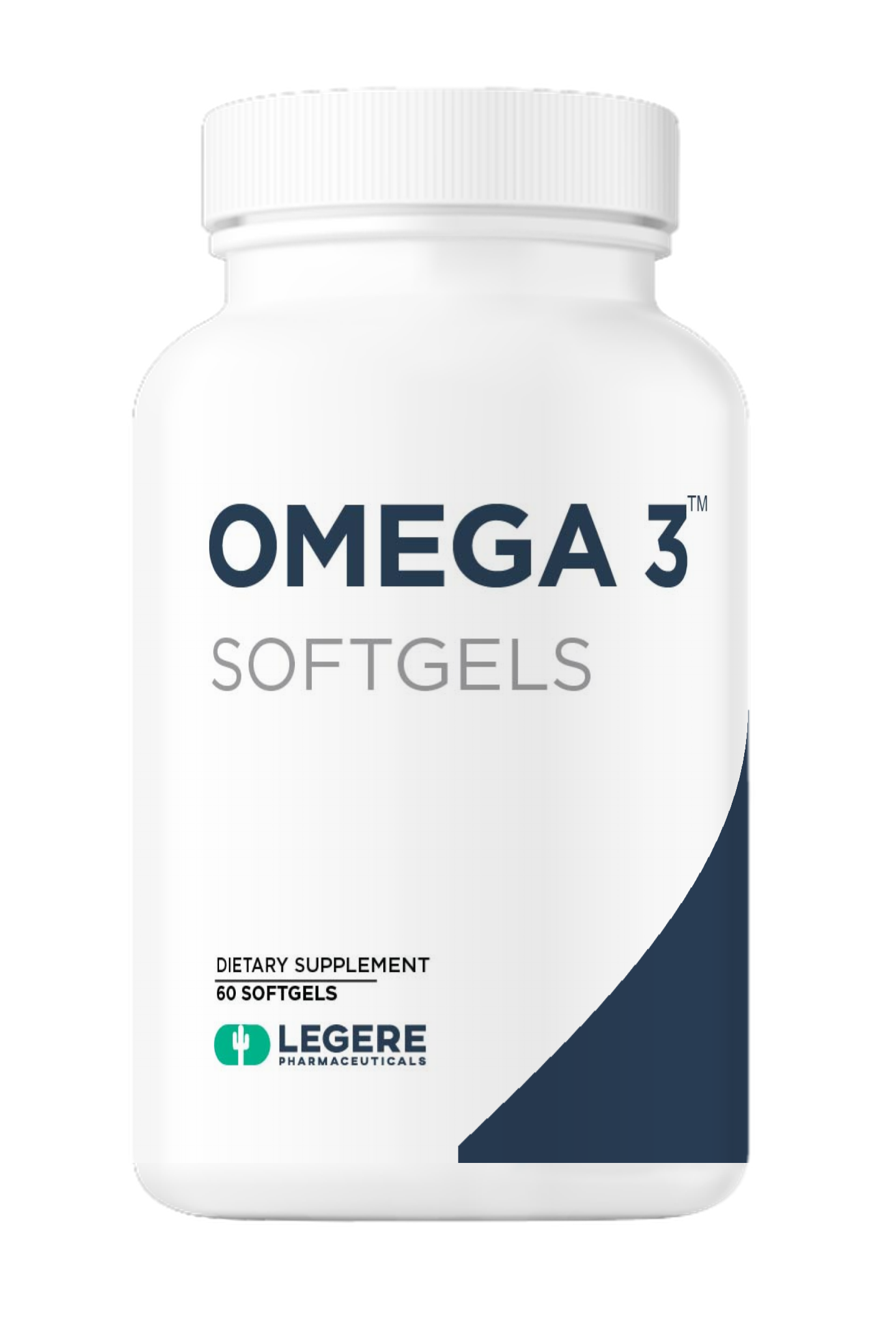
Omega 3 softgels — 360mg EPA and 240mg DHA per serving from 2,000mg premium marine lipid concentrate. Pure, clean-formula cardiovascular, brain, and joint support. Gluten-free, dairy-free, soy-free.
Omega 3 delivers clinically studied levels of EPA (360mg) and DHA (240mg) per serving from 2,000mg of premium marine lipid concentrate — the two omega-3 fatty acids with the most extensive research supporting cardiovascular health, cognitive function, joint comfort, and systemic inflammation management. The formula is clean and pure: gluten-free, soy-free, dairy-free, egg-free, and free of yeast, starch, and preservatives. For medical practices whose patients need a reliable, high-quality omega-3 supplement, Legere’s Omega 3 provides therapeutic EPA and DHA doses in a straightforward softgel format.
| Specification | Detail |
|---|---|
| Marine Lipid Concentrate | 2,000 mg per serving |
| Total Omega-3 Fatty Acids | 600 mg per serving |
| EPA (Eicosapentaenoic Acid) | 360 mg |
| DHA (Docosahexaenoic Acid) | 240 mg |
| Softgels per bottle | 60 |
| Other ingredients | Gelatin, glycerin, purified water, mixed tocopherols |
| Free of | Gluten, soy, dairy, eggs, yeast, starch, preservatives |
| Suggested use | 1-2 softgels with each meal, or as recommended by a healthcare provider |
| Private label | Available |
Legere supplies licensed medical practices with a range of quantities to fit your volume needs. To get pricing, check availability, or place an order, click Request a Quote above or contact our team directly. Private label options are available on select products.
Omega-3 fatty acids are essential fats — the body cannot produce them and must obtain them through diet or supplementation. Fish, particularly cold-water fatty fish, are the primary dietary source. Most people do not consume enough oily fish to maintain the serum omega-3 levels associated with clinical benefit. That gap is what omega-3 supplementation addresses.
EPA (Eicosapentaenoic Acid — 360mg) is the primary anti-inflammatory omega-3. It produces resolvins and protectins — compounds that help resolve inflammation rather than simply suppressing it. EPA is the omega-3 most closely linked to cardiovascular benefits including healthy triglyceride levels, reduced platelet aggregation, and support for healthy blood pressure. It also plays a meaningful role in mood regulation — EPA is the form preferentially studied in omega-3 and depression research.
DHA (Docosahexaenoic Acid — 240mg) is the structural omega-3 — it is a primary building block of brain cell membranes and retinal tissue. The brain is approximately 60% fat, and DHA makes up a significant portion of that structure. Adequate DHA is essential for memory, cognitive processing speed, and focus. DHA also supports anti-inflammatory activity and contributes to cardiovascular health through complementary mechanisms to EPA.
Why the EPA:DHA ratio matters: Legere’s Omega 3 delivers a 3:2 EPA to DHA ratio — consistent with formulas used in major clinical cardiovascular and cognitive research. This is not an arbitrary ratio; it reflects the balance found effective in studies on heart health, inflammation, and brain function.
Why dose matters: Many low-quality fish oil supplements deliver very small amounts of actual EPA and DHA despite appearing to have high total fish oil content. At 360mg EPA and 240mg DHA per serving, Legere’s Omega 3 provides 600mg of total omega-3s per serving — within the clinically meaningful range for cardiovascular and cognitive support. Patients taking 1-2 softgels per meal can reach daily intake levels consistent with research-supported therapeutic ranges.
Omega-3 fatty acids have one of the most extensive bodies of human clinical research of any dietary supplement:
Cardiovascular health: Omega-3s reduce serum triglycerides — one of the most consistently demonstrated effects in supplementation research. They support healthy blood pressure, reduce platelet aggregation, improve arterial flexibility, and have anti-inflammatory effects on blood vessel walls. The FDA has approved omega-3 prescription formulations specifically for hypertriglyceridemia, which underscores the clinical evidence base.
Cognitive function and brain health: DHA is the dominant structural fat in brain cell membranes. Lower DHA levels are associated with cognitive decline, memory impairment, and dementia risk. Supplementation supports memory, attention, and processing speed — particularly relevant for older adult patients and those with risk factors for cognitive decline.
Joint comfort and inflammation: EPA and DHA reduce the production of pro-inflammatory eicosanoids — the compounds that drive joint inflammation and pain in conditions like rheumatoid arthritis. Clinical trials show meaningful reductions in joint stiffness, tenderness, and the need for NSAIDs in patients supplementing with omega-3s at therapeutic doses.
Mood and mental health: EPA is the omega-3 fatty acid most closely studied in mood disorders. Research shows EPA supplementation supports healthy mood and may reduce depressive symptoms — a relevant finding for practices managing patients with anxiety, mild depression, or mood changes associated with hormonal transitions.
BHRT and women’s health practices: Omega-3s address multiple concerns common in perimenopausal and postmenopausal women — cardiovascular risk increases after estrogen decline, cognitive changes are common concerns, joint discomfort increases, and mood changes are frequent. Omega 3 softgels provide clinically meaningful support across all of these simultaneously.
Men’s health and TRT practices: Testosterone therapy can increase red blood cell production, which can raise cardiovascular risk. Omega-3s support cardiovascular health and help manage the inflammatory dimension of metabolic changes that accompany hormone optimization.
Medical weight loss and GLP-1 practices: Rapid weight loss and GLP-1 therapy mobilize stored fat, which can temporarily raise triglycerides. Omega-3s support healthy triglyceride metabolism during active weight loss. They also support the insulin sensitivity and anti-inflammatory benefits that reinforce GLP-1 therapy’s metabolic outcomes.
Longevity and anti-aging practices: Omega-3s are foundational in longevity medicine — addressing cardiovascular aging, neurological aging, and systemic inflammation (a primary driver of accelerated aging) through a single, well-tolerated daily supplement.
Functional and integrative medicine practices: Anti-inflammatory nutrition is central to functional medicine. Omega-3 supplementation is among the most evidence-backed nutritional interventions for systemic inflammation — a near-universal recommendation across functional medicine protocols.
Pain management and orthopedic-adjacent practices: Joint inflammation, morning stiffness, and the drive to reduce NSAID dependency are common patient goals. Omega-3s support joint comfort through the anti-inflammatory pathway at meaningful clinical doses.
DHEA Capsules — For BHRT and hormone optimization practices. DHEA supports adrenal hormone production; Omega 3 supports the cardiovascular and inflammatory environment that hormone health depends on. A natural pairing in comprehensive anti-aging protocols.
Stress & Adrenal Support Caps — Chronic stress elevates inflammatory markers and cortisol, which both omega-3s and adaptogens help address. Omega 3’s EPA-driven anti-inflammatory activity and Stress & Adrenal Support’s cortisol regulation work through complementary pathways for the same underlying driver.
D.N.S. Caps — Blood sugar and metabolic support alongside omega-3 cardiovascular and anti-inflammatory support. For metabolic health and GLP-1 practices, the combination addresses glucose metabolism and systemic inflammation simultaneously.
Calcium Magnesium Tablets — For BHRT and bone health programs where cardiovascular, skeletal, and metabolic support are all part of the protocol. Omega 3 addresses the cardiovascular and inflammatory dimension; Calcium Magnesium addresses the structural mineral dimension.
Blood thinners: Omega-3 fatty acids have mild antiplatelet effects. Patients on warfarin, aspirin, or other anticoagulants should notify their provider before supplementing at higher doses. At standard supplementation doses, clinically significant bleeding risk is low but worth disclosing.
Fish allergy: Omega 3 is derived from marine lipids. Patients with fish or shellfish allergies should discuss with their provider before use. The softgel shell contains gelatin — not appropriate for vegetarians or patients who avoid animal-derived gelatin.
Surgery: Omega-3s may increase bleeding time. Patients should discuss with their surgeon and provider whether to pause supplementation before elective surgery.
Fishy aftertaste (burping): The most common patient complaint about fish oil supplements. Taking softgels with meals — as directed — significantly reduces this. Some patients benefit from storing the bottle in the freezer, which slows softgel dissolution in the stomach.
Oxidation quality: Fish oil quality degrades with heat, light, and air exposure. The mixed tocopherols in Legere’s Omega 3 serve as antioxidant preservatives to maintain oil freshness. Store at room temperature away from direct light and heat.
These statements have not been evaluated by the Food and Drug Administration. This product is not intended to diagnose, treat, cure, or prevent any disease.
How do I order, and what quantities are available?
Contact our team directly to place an order or request a quote. We supply a range of quantities depending on the product — reach out for current availability, lead times, and volume pricing. Private label options are available.
What is the difference between EPA and DHA, and why does the ratio matter?
EPA is primarily anti-inflammatory and cardiovascular — it reduces triglycerides, supports healthy blood pressure, and drives the resolution of inflammation. DHA is primarily structural — it is a key building block of brain cell membranes and supports memory and cognitive function. Both are essential and work best together. Legere’s 3:2 EPA to DHA ratio reflects the balance used in major cardiovascular and cognitive research, making it appropriate for broad supplementation across most clinical contexts.
How much omega-3 do patients actually need to see clinical benefit?
Research on cardiovascular outcomes typically uses total EPA+DHA in the range of 1,000–4,000mg per day depending on the indication. For general cardiovascular and cognitive support, intakes of 1,000–2,000mg of combined EPA+DHA daily are commonly cited in clinical guidelines. At 600mg total omega-3s per serving, patients taking 2 softgels with two meals daily reach approximately 2,400mg — within the clinically meaningful range. Practices managing patients with specific cardiovascular or inflammatory conditions may consider higher-dose protocols.
Why is this formula free of common allergens?
The clean formulation — free of gluten, soy, dairy, eggs, yeast, starch, and preservatives — makes Omega 3 appropriate for the broadest possible patient population, including those with common food sensitivities. It reduces the risk of adverse reactions unrelated to the omega-3 content itself and makes it a straightforward recommendation for practices that cannot pre-screen every patient for every excipient.
Is private label available?
Yes. Contact our team to discuss private label options, minimum quantities, and label customization for your practice.

Schedule a no obligation/no-pressure call to quickly increase your weight loss clinic’s revenue.