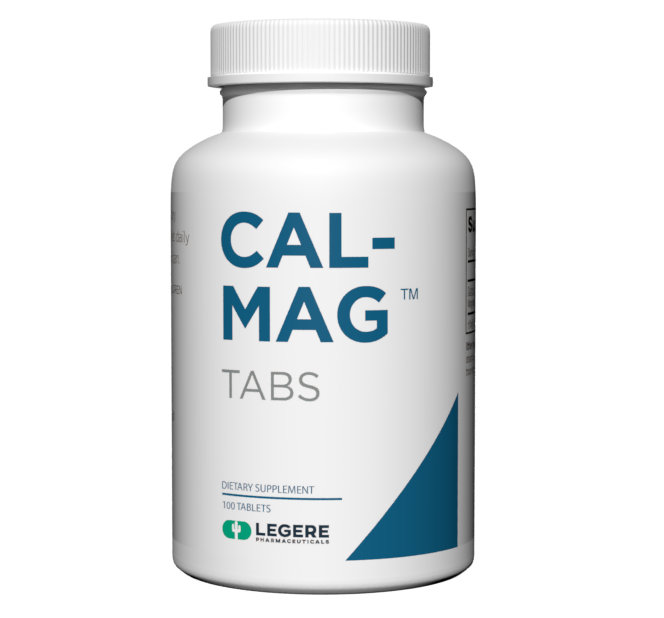
Calcium Carbonate 400mg and Magnesium Oxide 285mg — for licensed medical and wellness practices. Foundational mineral support for bone health, muscle function, and metabolic enzyme activity.
Calcium Magnesium Tablets deliver two of the most important minerals in the body — Calcium Carbonate at 400mg and Magnesium Oxide at 285mg per tablet — in a straightforward, high-dose formula for practices managing patients with bone health concerns, mineral deficiency, or metabolic conditions where these minerals play a critical role. Calcium is the most abundant mineral in the body and the primary structural component of bones and teeth. Magnesium is essential for calcium absorption and utilization, energy metabolism, and over 300 additional enzymatic reactions. Neither works optimally without the other.
| Ingredient | Amount per tablet | % DV |
|---|---|---|
| Calcium (as carbonate) | 400 mg | 31% |
| Magnesium (as oxide) | 285 mg | 68% |
| Specification | Detail |
|---|---|
| Form | Tablet |
| Suggested use | Take with food for best absorption |
| Private label | Available |
Legere supplies licensed medical practices with a range of quantities to fit your volume needs. To get pricing, check availability, or place an order, click Request a Quote above or contact our team directly. Private label options are available on select products.
Calcium is the primary mineral in bone tissue — approximately 99% of the body’s calcium is stored in the skeleton and teeth. Beyond bone structure, calcium is essential for muscle contraction, nerve signaling, blood clotting, and hormone secretion. As the body ages and as dietary calcium intake becomes inadequate, the skeleton releases calcium into the bloodstream to meet these functional demands — gradually weakening bone density. Calcium Carbonate contains the highest concentration of elemental calcium per gram of any calcium salt, making it the most efficient calcium form for supplementation.
Magnesium plays a dual role alongside calcium. First, it is an essential cofactor in the enzymatic conversion of Vitamin D to its active form — the form that enables calcium to be absorbed in the intestines. Without adequate magnesium, calcium supplementation has limited effectiveness because Vitamin D cannot be fully activated to drive absorption. Second, magnesium regulates calcium transport into and out of cells — preventing excessive calcium accumulation in soft tissues while ensuring bones receive what they need. Magnesium also independently supports energy production, glucose metabolism, muscle relaxation (the counterbalance to calcium’s role in contraction), and over 300 other enzymatic reactions.
The absorption note: Taking calcium with food significantly improves absorption — gastric acid produced during meals enhances calcium dissolution from the carbonate salt. The product sheet specifically recommends taking with food for this reason.
Calcium levels decline steadily with age in both men and women. The consequences — osteoporosis, increased fracture risk, curvature of the spine, bone pain, and premature skin changes from reduced structural tissue support — develop gradually and are often not recognized until significant bone loss has already occurred. Magnesium is the second most common nutrient deficiency in the U.S., contributing to fatigue, muscle cramps, poor sleep, and impaired glucose metabolism alongside its effect on calcium absorption.
The combination is particularly relevant for:
BHRT and women’s health practices: Estrogen plays a direct role in maintaining bone density — its decline during menopause is the primary driver of postmenopausal osteoporosis. Calcium Magnesium is a standard foundational supplement in BHRT and women’s health programs, working alongside hormone therapy to maintain skeletal health.
Medical weight loss and GLP-1 practices: Patients in caloric restriction or on GLP-1 therapy have reduced food intake, which reduces calcium and magnesium intake. Supplementing these minerals ensures the weight loss program does not come at the cost of bone and metabolic mineral status.
Corticosteroid and pain management practices: Long-term corticosteroid use — relevant for practices using injectable steroids for joint management — is well-documented to reduce bone density. Calcium and magnesium supplementation is standard supportive care alongside corticosteroid therapy.
Functional and integrative medicine practices: Magnesium deficiency is a root cause of multiple common complaints — fatigue, muscle cramps, poor sleep, insulin resistance, and constipation. Calcium Magnesium addresses both the bone health and the broader metabolic magnesium deficiency dimension in a single product.
Wellness and longevity practices: Bone density is a foundational health marker. Practices managing healthy aging use Calcium Magnesium as a baseline supplement for patients over 40, alongside Vitamin D3 for optimal calcium absorption.
DHEA 25mg Capsules — For BHRT practices. DHEA supports adrenal androgen production that, alongside estrogen, contributes to bone mineral density maintenance. Calcium Magnesium addresses the direct mineral substrate; DHEA supports the hormonal environment.
Rodex Forte Caps — B6, B12, and folic acid alongside bone mineral support. B vitamins support homocysteine regulation — elevated homocysteine is associated with reduced bone density, making Rodex Forte a clinically relevant pairing with Calcium Magnesium for bone health programs.
Stress & Adrenal Support Caps — Chronic cortisol elevation accelerates bone density loss and increases urinary calcium excretion. Addressing the cortisol driver alongside calcium and magnesium replenishment provides more complete bone health support.
Kato Plus Caps — Magnesium Aspartate and Potassium Aspartate for mineral replenishment alongside Calcium Magnesium’s bone mineral foundation. The two products cover different mineral needs — Calcium Magnesium for bone structure and calcium absorption, Kato Plus for cellular energy and glucose metabolism.
Kidney stones: Patients with a history of calcium oxalate kidney stones should discuss calcium supplementation with their provider. Calcium carbonate taken with meals actually reduces oxalate absorption and may be protective — but the overall calcium balance should be managed with provider input.
Kidney disease: Both calcium and magnesium are renally cleared. Patients with significant kidney impairment should use mineral supplements under physician supervision with monitoring.
Drug interactions: Calcium reduces absorption of certain medications including fluoroquinolone and tetracycline antibiotics, thyroid hormone, and bisphosphonates. Take Calcium Magnesium at least 2 hours separated from these medications.
Hypercalcemia: Do not use in patients with elevated serum calcium. Conditions causing hypercalcemia — hyperparathyroidism, certain malignancies — are contraindications to supplemental calcium.
Magnesium and laxative effect: At higher total daily magnesium doses, a mild laxative effect may occur. This can be managed by dividing doses across meals.
These statements have not been evaluated by the Food and Drug Administration. This product is not intended to diagnose, treat, cure, or prevent any disease.
How do I order, and what quantities are available?
Contact our team directly to place an order or request a quote. We supply a range of quantities depending on the product — reach out for current availability, lead times, and volume pricing. Private label options are available.
Why do calcium and magnesium need to be taken together?
Magnesium is required to activate Vitamin D — the hormone that drives calcium absorption in the intestines. Without adequate magnesium, calcium supplementation is significantly less effective because the absorption mechanism depends on active Vitamin D. Magnesium also regulates where calcium goes in the body — keeping it in bones rather than depositing in soft tissues. The two minerals work synergistically and are more effective together than either alone.
Why does it matter to take calcium with food?
Calcium carbonate requires an acidic environment to dissolve and be absorbed. Stomach acid produced during meals provides this environment. Taking calcium carbonate on an empty stomach — when acid levels are low — reduces absorption significantly. For best results, take with the largest meal of the day.
Is Calcium Magnesium appropriate for patients on GLP-1 medications?
Yes. GLP-1 medications reduce food intake, which reduces mineral intake alongside calories. Bone mineral density depends on consistent daily calcium and magnesium intake — a deficit that accumulates quietly over months can have significant long-term consequences. Calcium Magnesium supplementation ensures mineral intake is maintained regardless of dietary changes during GLP-1 therapy.
Is private label available?
Yes. Contact our team to discuss private label options, minimum quantities, and label customization for your practice.
These statements have not been evaluated by the Food and Drug Administration. This product is not intended to diagnose, treat, cure, or prevent any disease.

Schedule a no obligation/no-pressure call to quickly increase your weight loss clinic’s revenue.