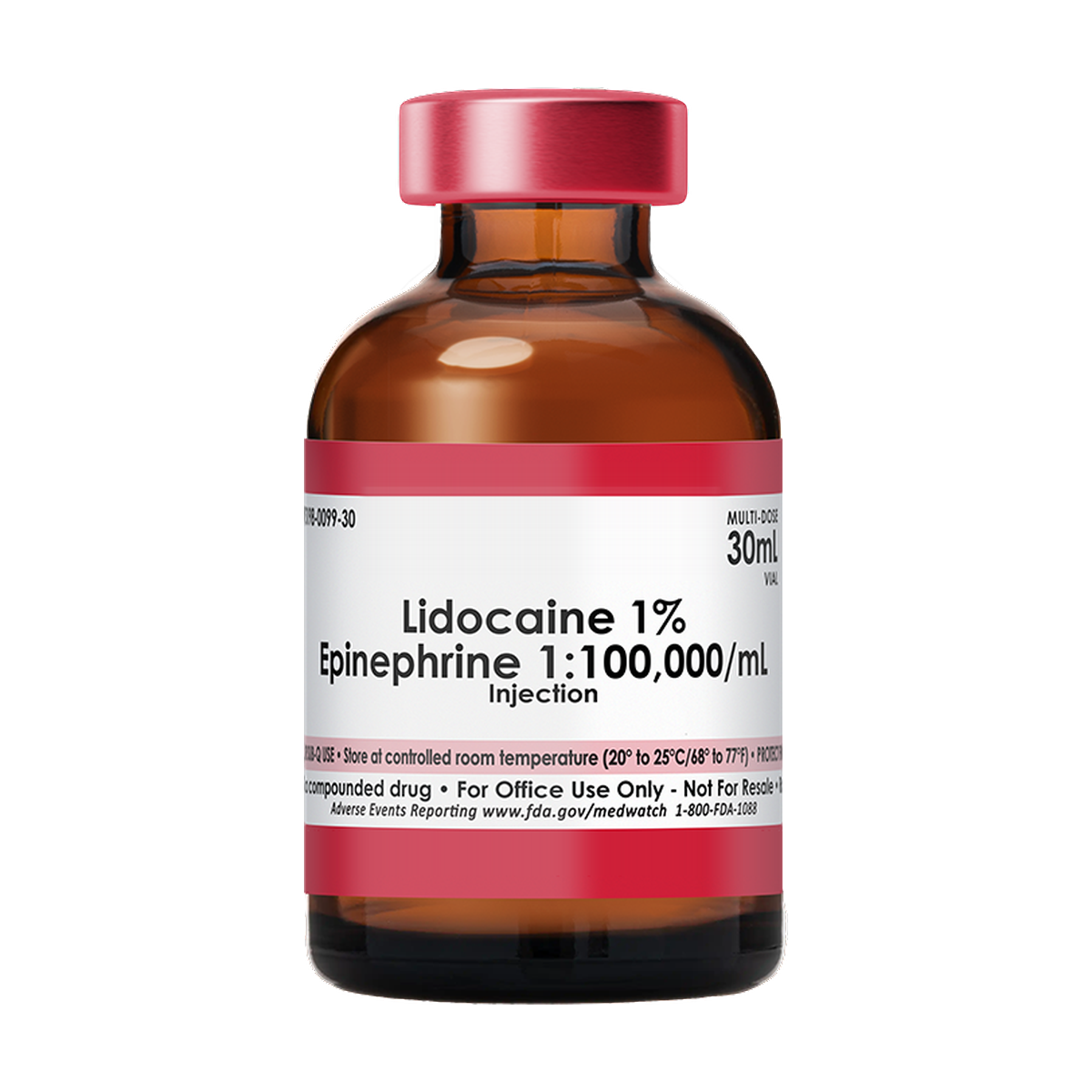
Lidocaine 1% with Epinephrine 1:100,000 adds vasoconstriction to standard local anesthesia — reducing procedural bleeding, extending anesthetic duration, and improving field visibility. The preferred option for dermatological excisions, skin lesion removal, and procedures requiring hemostatic control.
Lidocaine with Epinephrine combines the proven local anesthesia of Lidocaine 1% with the vasoconstrictive action of Epinephrine at 1:100,000 concentration. Where plain Lidocaine numbs the targeted area, Epinephrine simultaneously constricts local blood vessels — reducing bleeding at the procedure site, extending the duration of anesthesia, and slowing systemic absorption of Lidocaine. The result is a cleaner procedural field, longer working time, and a safer systemic profile compared to plain Lidocaine at equivalent doses.
| Specification | Detail |
|---|---|
| Lidocaine HCl | 1% (10 mg/mL) |
| Epinephrine | 1:100,000/mL |
| Route | IM or SQ |
| Storage | Room temperature; protect from light |
Note: Route is IM or SQ only — not for IV administration. Intravenous epinephrine administration carries serious cardiac risk and is contraindicated in this formulation.
Vasoconstriction for reduced bleeding: Epinephrine causes local blood vessel constriction at the injection site, significantly reducing procedural bleeding. This is particularly valuable in dermatological excisions, skin lesion removals, and any minor surgical intervention where a bloodless or near-bloodless field improves procedural accuracy.
Extended anesthetic duration: By constricting vessels, Epinephrine slows the absorption and clearance of Lidocaine from the tissue — extending the duration of local anesthesia compared to plain Lidocaine at the same concentration. Less need for re-dosing mid-procedure.
Reduced systemic Lidocaine absorption: Slower vascular uptake means lower peak plasma Lidocaine levels — improving the safety profile, particularly for larger treatment areas or longer procedures where total Lidocaine dose is a consideration.
Improved procedural efficiency: Less bleeding and longer anesthetic window together allow providers to work more efficiently, with less interruption for hemostasis or re-dosing.
Lidocaine with Epinephrine is used in:
| Lidocaine with Epinephrine | Plain Lidocaine 1% | |
|---|---|---|
| Anesthetic duration | Extended | Standard |
| Bleeding control | Yes — vasoconstriction | No |
| Systemic absorption | Slower, lower peak levels | Standard |
| Route | IM or SQ only | IM, IV, or SQ |
| Best for | Excisions, dermatology, procedures needing hemostasis | Vein care buffering, IV protocols, general anesthesia |
Do not use in end-arterial tissue: Epinephrine is absolutely contraindicated for injection into areas supplied by end arteries with no collateral circulation — specifically fingers, toes, ears, nose, and penis. Vasoconstriction in these areas can cause ischemia and tissue necrosis.
Not for IV administration: This formulation is for IM or SQ only. Intravenous Epinephrine administration carries serious cardiac risk and is not appropriate with this product.
Methemoglobinemia: This medication can cause methemoglobinemia — a rare but serious blood condition. Risk is elevated with higher doses but can occur at low doses. Monitor for bluish-colored lips, fingernails, or palms; dark urine; or difficulty breathing. Inform all treating providers and laboratory personnel that the patient has received this medication.
Cardiovascular precautions:
Additional contraindications:
Pregnancy and breastfeeding: No adequate studies on Epinephrine during breastfeeding. Weigh potential benefits against risks with clinical specialist guidance.
Common side effects: Cold or numb feeling at injection site, mild nervousness or sense of well-being, mild nausea, stinging or burning on injection.
Serious side effects requiring immediate provider attention: Chest pain, irregular heartbeat, severe dizziness, seizures, difficulty breathing, bluish skin discoloration, hives or swelling of face and throat.
As a compounded Rx product, Lidocaine 1% with Epinephrine Injection has not been evaluated by the FDA for safety, efficacy, or quality. Administer only under the supervision of a licensed healthcare provider in accordance with current clinical and state regulatory guidelines.
Is a prescription required to order Lidocaine with Epinephrine Injection?
Yes. Available exclusively to licensed healthcare providers and medical practices.
What is the concentration and route?
Lidocaine 1% (10mg/mL) with Epinephrine 1:100,000/mL. For IM or SQ administration only — not for IV use.
Why is Epinephrine contraindicated in certain injection sites?
Areas supplied by end arteries without collateral circulation — fingers, toes, ears, nose, and penis — cannot tolerate vasoconstriction safely. Epinephrine injection in these areas can cause ischemia and tissue necrosis.
How does Lidocaine with Epinephrine differ from plain Lidocaine?
Epinephrine adds vasoconstriction — reducing procedural bleeding, extending anesthetic duration, and slowing systemic Lidocaine absorption. Plain Lidocaine is IV-compatible and used for vein care buffering and general procedural anesthesia. Lidocaine with Epinephrine is specifically for procedures where hemostasis and extended working time are priorities
This is a compounded medication. Compounded drugs are not FDA-approved and have not been evaluated by the FDA for safety, efficacy, or quality. This product is available by prescription only and is intended for use by or on the order of a licensed healthcare provider.

Schedule a no obligation/no-pressure call to quickly increase your weight loss clinic’s revenue.