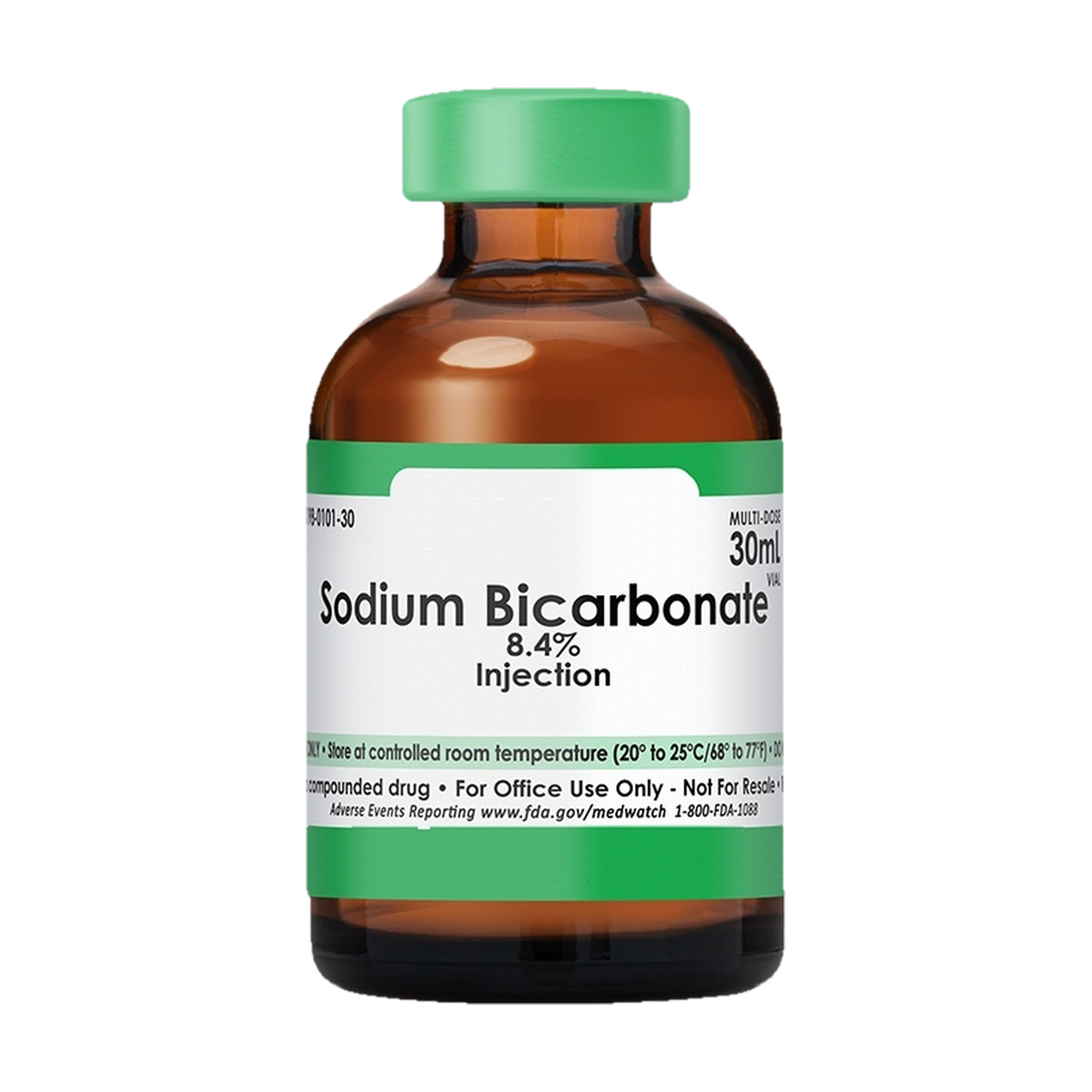
Sodium Bicarbonate Injection

Sodium Bicarbonate 8.4% is an alkalinizing agent used to buffer the pH of lidocaine solutions before injection, significantly reducing the pain and burning associated with local anesthetic administration. A practical procedural adjuvant for vein care and sclerotherapy practices.

SHARE THIS PRODUCT:

Sodium Bicarbonate 8.4% Injection: Alkalinizing Agent for Vein Care and Procedural Protocols

Sodium Bicarbonate 8.4% is an alkalinizing agent used to neutralize acidity and adjust pH in clinical settings. In vein care and aesthetic medicine, its primary application is buffering lidocaine-based local anesthetics before injection, a well-established technique for significantly reducing the pain and burning sensation that patients experience when lidocaine is injected into the skin. By raising the pH of the lidocaine solution closer to physiological pH, sodium bicarbonate allows more of the anesthetic to penetrate nerve membranes in its active, uncharged form, improving both patient comfort and anesthetic onset speed.

Formula

SpecificationDetail
Active ingredientSodium Bicarbonate
Concentration8.4% (Multi-Dose Vial)
Volume30mL
RouteIV
StorageControlled room temperature; do not freeze

Clinical Applications in Vein Care

Lidocaine buffering for sclerotherapy: When injecting lidocaine around or near treatment sites, adding a small amount of sodium bicarbonate raises the solution’s pH toward physiological levels. This reduces the stinging and burning that patients associate with local anesthetic injection, improving procedural tolerance and patient satisfaction.

Lidocaine with epinephrine buffering: Lidocaine/epinephrine solutions have a lower pH than plain lidocaine. Buffering with sodium bicarbonate is particularly effective here, meaningfully reducing injection pain without affecting the anesthetic or vasoconstrictive efficacy of the solution.

Endovenous and local anesthesia procedures: Any procedure requiring large volumes of local anesthetic, including tumescent anesthesia for laser vein treatment, benefits from buffered lidocaine in terms of patient comfort during administration.

Buffering Ratios

Standard practice for buffering lidocaine with sodium bicarbonate typically follows a 9:1 ratio (9 parts lidocaine to 1 part sodium bicarbonate 8.4%), though the appropriate ratio may vary based on the specific formulation and clinical context. The ordering provider’s protocol and current clinical guidelines should govern specific preparation instructions.

Benefits

  • Reduces pain and burning associated with lidocaine injection in vein care procedures
  • Raises pH of lidocaine solution closer to physiological range for improved patient comfort
  • May improve anesthetic onset speed by increasing the proportion of active, uncharged anesthetic molecules
  • No effect on anesthetic efficacy or epinephrine activity at appropriate concentrations
  • Simple preparation with standard dilution ratios

Precautions and Contraindications

Contraindicated in patients:

  • Losing chloride via vomiting or continuous gastrointestinal suction
  • Receiving diuretics known to produce hypochloremic alkalosis

These conditions indicate an existing alkalotic state in which additional alkalinization would be contraindicated.

General precautions:

  • Do not freeze; store at controlled room temperature
  • Sodium bicarbonate at 8.4% is a highly concentrated solution; use appropriate dilution ratios when preparing buffered anesthetic mixtures
  • Review all patient medications for potential interactions before use

As a compounded Rx product, Sodium Bicarbonate 8.4% Injection has not been evaluated by the FDA for safety, efficacy, or quality. For use by or on the order of a licensed healthcare provider only.

Who It’s For

  • Vein care specialists and phlebologists performing sclerotherapy with lidocaine-based local anesthesia
  • Aesthetic medicine and dermatology practices using tumescent or local anesthesia for laser vein or skin procedures
  • Any practice seeking to improve patient comfort during local anesthetic administration

Pairs Well With

Practices using Sodium Bicarbonate 8.4% typically combine it with Polidocanol 2% Injection, Lidocaine 1% Injection, and/or Lidocaine 1% with Epinephrine as part of a complete vein care procedural supply.

FAQs

Is a prescription required to order Sodium Bicarbonate 8.4% Injection?
Yes. This is a compounded Rx product dispensed exclusively to licensed healthcare providers and medical practices. It is not available for direct patient purchase.

What is the primary use of Sodium Bicarbonate 8.4% in vein care?
Its primary application is buffering lidocaine-based local anesthetics before injection to reduce the pain and burning associated with anesthetic administration, improving patient comfort during sclerotherapy and other vein procedures.

What is the standard buffering ratio when mixing with lidocaine?
A commonly used ratio is 9 parts lidocaine to 1 part Sodium Bicarbonate 8.4%. The appropriate ratio may vary by formulation and clinical context; follow your clinical protocol and current guidelines.

Who should not receive sodium bicarbonate?
It is contraindicated in patients losing chloride through vomiting or continuous GI suction, and in patients on diuretics causing hypochloremic alkalosis.


This is a compounded medication. Compounded drugs are not FDA-approved and have not been evaluated by the FDA for safety, efficacy, or quality. This product is available by prescription only and is intended for use by or on the order of a licensed healthcare provider.

Legere: Your Partner in Success

Helpful In-Depth Research and Information

Top Quality Health Supplements Branded for Your Practice

Expert Guidance to help You Grow Your Medical Practice

Ready to Start Growing Your Practice? Let’s Chat!

Schedule a no obligation/no-pressure call to quickly increase your weight loss clinic’s revenue.