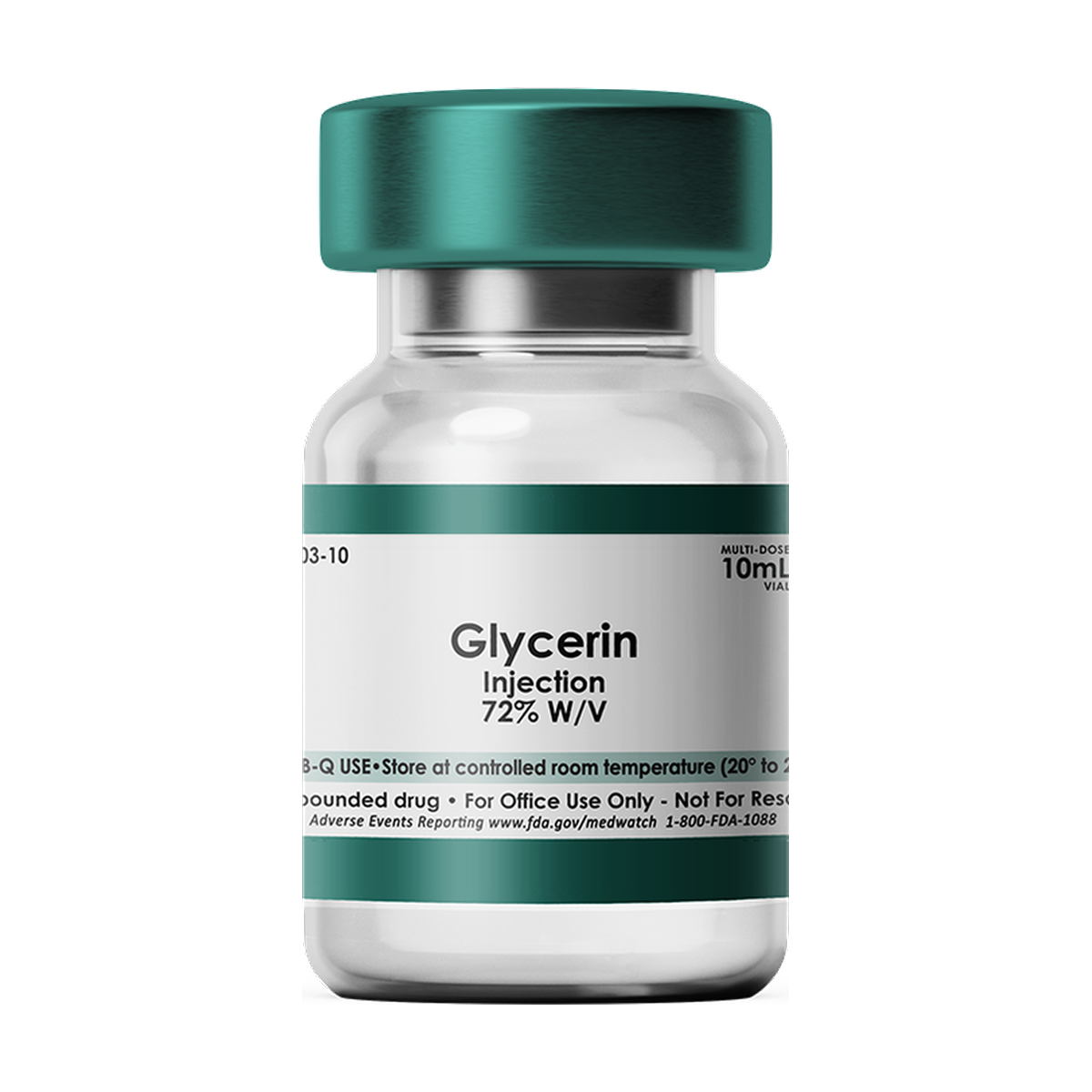
Glycerin 72% is a highly concentrated sclerosant for the smallest spider veins — those measuring 0.2–0.4mm in diameter where Polidocanol may be too aggressive. Known for its favorable tolerability and low incidence of side effects compared to other sclerosants.
Glycerin 72% is a highly concentrated sclerosant used to treat the smallest visible veins — fine telangiectasias and spider veins measuring between 0.2 and 0.4mm in diameter. When injected directly into these small vessels, the concentrated glycerin irritates the vein wall endothelium, causing the vessel to constrict and seal. Over time, the collapsed vein is reabsorbed by surrounding tissue and fades from view.
Compared to other sclerosants, glycerin is noted for its lower incidence of side effects and favorable patient tolerability, making it a preferred option for treating the finest, most superficial spider veins where patient comfort during and after the procedure is a priority.
| Specification | Detail |
|---|---|
| Concentration | 72% |
| Target vessel size | 0.2–0.4mm diameter |
| Route | Intravariceal injection (directly into target vein) |
| Storage | Room temperature |
Note: This is intravariceal injection — administered directly into the target vein wall — not standard intravenous infusion.
Both are sclerosants used in cosmetic vein treatment, but they serve different vessel sizes and clinical contexts:
| Glycerin 72% | Polidocanol 2% | |
|---|---|---|
| Target vessel size | 0.2–0.4mm (finest spider veins) | Larger spider veins and reticular veins |
| Local anesthetic properties | No | Yes |
| Tolerability profile | Very favorable, low side effects | Strong, with anesthetic comfort benefit |
| Best for | Fine telangiectasias | Spider and reticular veins |
Choose Glycerin 72% for the finest, most superficial spider veins where precision injection into very small caliber vessels is required.
Choose Polidocanol 2% for larger spider veins and reticular feeder veins, and when the local anesthetic property of Polidocanol is clinically advantageous for patient comfort.
Many vein care specialists use both in the same practice — Glycerin for the smallest vessels and Polidocanol for larger ones — treating the full spectrum of cosmetic vein concerns in a single protocol.
Fine vessel precision: Targets the 0.2–0.4mm diameter range specifically — the finest, most superficial telangiectasias that require a gentler sclerosant than larger-caliber agents.
Favorable tolerability: Lower incidence of side effects compared to many alternative sclerosants, particularly relevant for patients with sensitive skin or those undergoing multiple treatment sessions.
Natural origin: Glycerin (glycerol) is derived from natural sources, an attribute some practices choose to highlight in their patient-facing treatment communications.
Complementary to Polidocanol: The two sclerosants cover different vessel sizes, making them natural catalog companions for practices offering full-spectrum cosmetic vein treatment.
Polidocanol 2% Injection — The natural companion sclerosant for larger spider and reticular veins. Stocking both gives the practice complete coverage across all spider vein sizes in a single protocol.
Sodium Bicarbonate Injection — Used to buffer lidocaine when local anesthesia is needed alongside glycerin treatment, improving patient comfort at the injection site.
Glutathione Injection and Ascorbic Acid Injection — Post-procedure antioxidant support for practices focused on patient skin recovery and outcomes.
Contraindications:
Side effects:
Post-treatment: Some temporary skin discoloration (hyperpigmentation) and bruising at treatment sites is normal and typically resolves over weeks to months. Patients should be counseled on expected post-treatment appearance before the procedure.
As a compounded Rx product, Glycerin 72% Injection has not been evaluated by the FDA for safety, efficacy, or quality. Administer only under the supervision of a licensed healthcare provider in accordance with current clinical and state regulatory guidelines.
FAQs
Is a prescription required to order Glycerin 72% Injection?
Yes. Available exclusively to licensed healthcare providers and medical practices.
What vessel size is Glycerin 72% designed for?
Fine telangiectasias and spider veins measuring 0.2–0.4mm in diameter — the smallest spider veins in cosmetic vein treatment.
How does Glycerin 72% differ from Polidocanol 2%?
Glycerin targets smaller vessel diameters (0.2–0.4mm) and has a very favorable tolerability profile with low side effects. Polidocanol handles larger spider and reticular veins and adds local anesthetic properties that improve patient comfort. Many practices stock both to cover the full range of vessel sizes.
What pairs well with Glycerin 72%?
Polidocanol 2% for larger veins, Sodium Bicarbonate for lidocaine buffering when local anesthesia is used, and post-procedure Glutathione and Ascorbic Acid for skin recovery support.
This is a compounded medication. Compounded drugs are not FDA-approved and have not been evaluated by the FDA for safety, efficacy, or quality. This product is available by prescription only and is intended for use by or on the order of a licensed healthcare provider.

Schedule a no obligation/no-pressure call to quickly increase your weight loss clinic’s revenue.