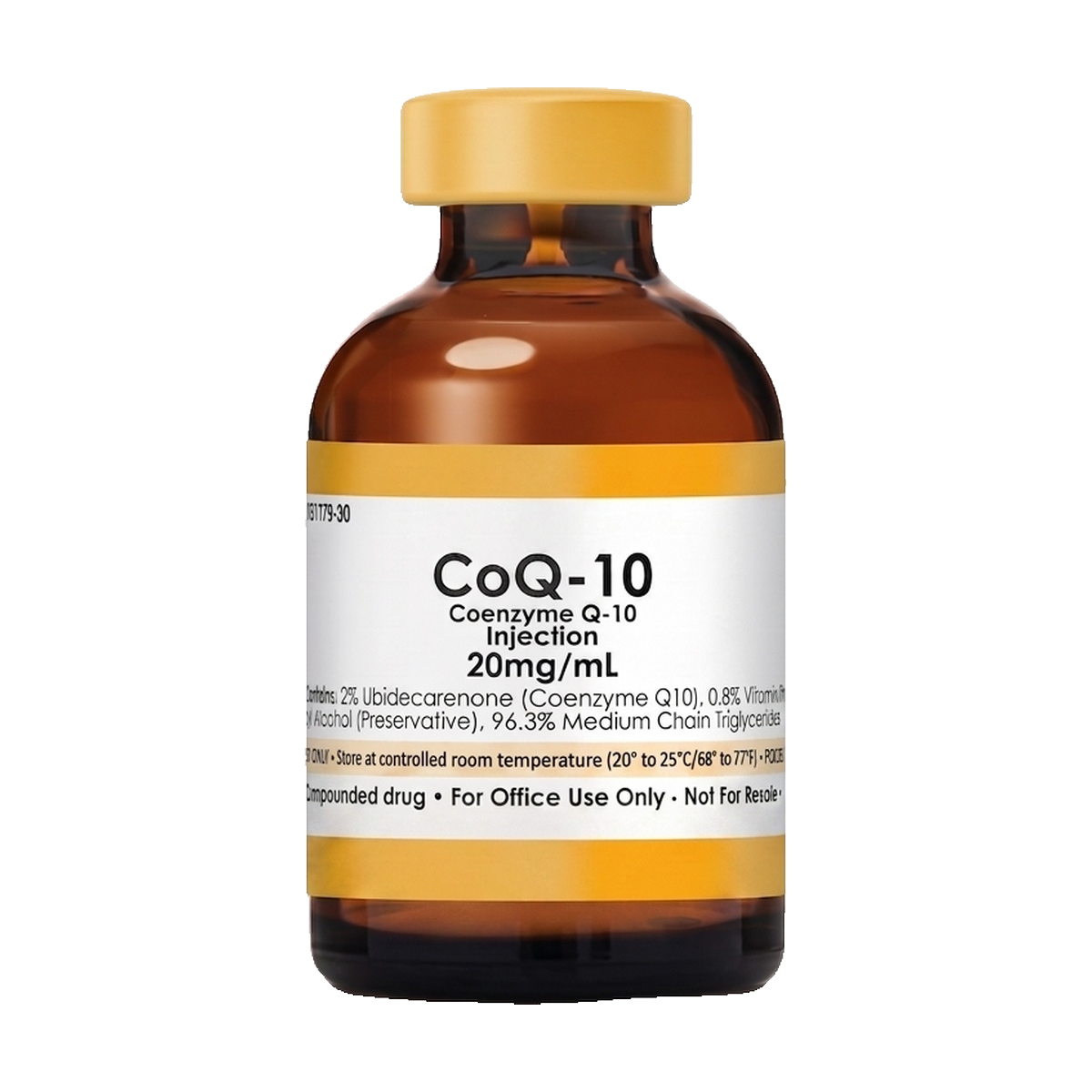
Coenzyme Q10 at 20mg/mL in an MCT oil base supports mitochondrial ATP production and antioxidant defense at the cellular level. A cornerstone of longevity and anti-aging injectable protocols.
CoQ10 is a fat-soluble antioxidant found in every cell of the body — with the highest concentrations in the heart, liver, and skeletal muscle where energy demand is greatest. Levels decline with age and are further reduced by statin therapy. The MCT oil base ensures consistent delivery that standard oral CoQ10 can’t reliably match.
| Specification | Detail |
|---|---|
| Active ingredient | Coenzyme Q10 |
| Concentration | 20 mg/mL |
| Base | MCT oil |
| Route | IM |
| Rx required | Yes |
Legere supplies licensed medical practices with a range of quantities to fit your volume needs. To get pricing, check availability, or place an order, click Request a Quote above or contact our team directly. A valid medical or pharmacy license is required to purchase prescription and injectable products.
CoQ10 is embedded in the inner mitochondrial membrane as part of the electron transport chain — the process that generates the vast majority of the body’s ATP. Without CoQ10, electrons cannot move through the chain efficiently, and ATP production drops. Every cell depends on this process; cells with the highest energy demands — heart, brain, skeletal muscle — are most affected by CoQ10 decline.
Beyond energy production, CoQ10 neutralizes free radicals generated during mitochondrial metabolism — the mitochondrial membrane is particularly vulnerable to oxidative damage, and CoQ10’s antioxidant role there is essential for maintaining mitochondrial function over time.
MCT oil base: CoQ10 is fat-soluble and requires a lipid delivery vehicle for effective absorption. MCT (medium-chain triglyceride) oil provides a bioavailable carrier that supports CoQ10 uptake — a better absorption profile than water-based formulations.
Age: CoQ10 synthesis declines starting around age 30 and continues throughout life. By age 60, levels may be 50% lower than peak levels — contributing to the fatigue, poor recovery, and cardiovascular changes that accompany aging.
Statin medications: Statins block the mevalonate pathway — the same metabolic route used to synthesize both cholesterol and CoQ10. Patients on statin therapy have measurably lower CoQ10 levels, which is a recognized contributor to the muscle fatigue and weakness many statin users experience
Longevity and anti-aging practices: CoQ10 is a cornerstone longevity injectable. It addresses the mitochondrial energy decline and oxidative damage accumulation that are fundamental mechanisms of aging.
IV therapy and wellness clinics: A premium energy and mitochondrial support injectable for practices offering differentiated IV protocols beyond standard B12 and Vitamin C.
Functional and integrative medicine practices: For patients on statins presenting with fatigue and muscle weakness, injectable CoQ10 addresses the deficiency that statin therapy creates.
Cardiovascular and wellness practices: CoQ10 has been studied for its role in heart failure, supporting cardiac energy metabolism in a muscle with extremely high ATP demands.
NAD+ Injection — NAD+ drives mitochondrial energy production alongside CoQ10. Together they address two foundational mitochondrial energy mechanisms — NAD+ for sirtuin activation and mitochondrial biogenesis, CoQ10 for electron transport chain function.
Alpha Lipoic Acid Injection — ALA regenerates CoQ10 alongside other antioxidants. Pairing ALA and CoQ10 ensures CoQ10 stays in its active reduced form for longer, extending its antioxidant and energy function.
Glutathione Injection — Antioxidant protection at the cellular level alongside CoQ10’s mitochondrial antioxidant function.
Niagen Injection — NR drives NAD+ production for sirtuin-mediated cellular repair; CoQ10 drives electron transport chain energy production. Both address mitochondrial function through complementary mechanisms.
Blood thinners: CoQ10 may have mild anticoagulant effects. Patients on warfarin should notify their provider.
Blood pressure: CoQ10 may lower blood pressure. Monitor patients on antihypertensive medications.
Insulin: CoQ10 may improve insulin sensitivity. Monitor blood sugar in patients on antidiabetic medications.
Oil-based injection: Because of the MCT oil base, CoQ10 injection must be administered IM — not IV. Confirm injection technique appropriate for oil-based injectables.
Prescription required. A valid medical or pharmacy license is required to purchase.
How do I order, and what quantities are available?
Contact our team directly to place an order or request a quote. Reach out for current availability, vial sizes, lead times, and volume pricing. A valid medical or pharmacy license is required.
Why is CoQ10 injection in an MCT oil base?
CoQ10 is fat-soluble and cannot be dissolved in water-based solutions. MCT oil provides a bioavailable lipid carrier that supports CoQ10 absorption after IM injection. The oil base also means this product is administered intramuscularly rather than intravenously.
Why do patients on statins need CoQ10 supplementation?
Statins inhibit the mevalonate pathway, which the body uses to synthesize both cholesterol and CoQ10. This means statin therapy reduces CoQ10 production as a side effect — a recognized contributor to the muscle fatigue and weakness some statin users experience. Supplementing CoQ10 addresses this depletion directly.
This is a prescription injectable product. A valid medical or pharmacy license is required to purchase. For use by licensed healthcare providers only.

Schedule a no obligation/no-pressure call to quickly increase your weight loss clinic’s revenue.