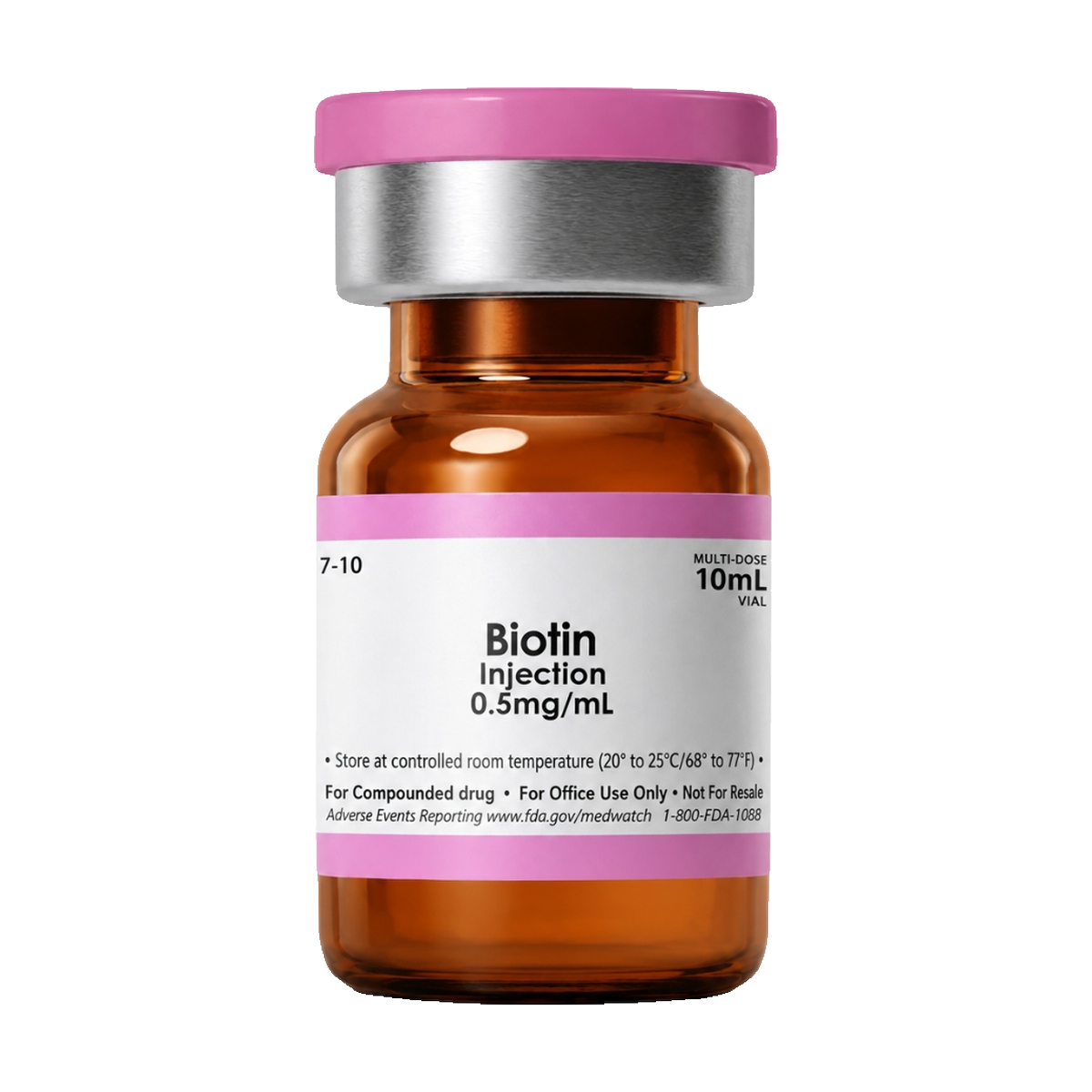
Biotin Injection — 0.5mg/mL for standard wellness protocols and 10mg/mL for higher-dose programs — for Injectable Vitamin B7 for keratin productin, energy metabolism, and B-complex pathway support.
Biotin (Vitamin B7) is the nutrient most closely associated with hair, skin, and nail health — but its clinical role extends well beyond aesthetics. Biotin is a cofactor in five essential carboxylase enzymes involved in fatty acid synthesis, amino acid metabolism, and gluconeogenesis. Deficiency causes the well-known hair thinning, brittle nails, and skin changes, but also fatigue, neurological symptoms, and impaired energy metabolism. Legere’s Biotin Injection is available in two concentrations — 0.5mg/mL for standard wellness protocols and 10mg/mL for higher-dose clinical applications — giving practices flexibility to match the right concentration to their protocol needs.
| Specification | Detail |
|---|---|
| Active ingredient | Biotin (Vitamin B7) |
| Concentrations available | 0.5 mg/mL · 10 mg/mL |
| Route | IV or IM |
| Rx required | Yes |
Legere supplies licensed medical practices with a range of quantities to fit your volume needs. To get pricing, check availability, or place an order, click Request a Quote above or contact our team directly. A valid medical or pharmacy license is required to purchase prescription and injectable products.
0.5mg/mL — Standard wellness concentration: Appropriate for practices incorporating biotin as part of a broader IV wellness or B-vitamin infusion. Suitable for routine biotin repletion, B-complex IV add-ons, and patients with mild deficiency or general hair and nail support goals.
10mg/mL — Higher-dose clinical concentration: Used for patients with confirmed biotin deficiency, significant hair loss or brittle nail presentations, GLP-1-related hair thinning (telogen effluvium), or clinical protocols that require therapeutic biotin doses. The 10mg/mL concentration provides 20 times the dose per mL, reducing infusion volume for high-dose protocols.
Biotin is required for the synthesis of keratin — the structural protein that makes up hair shafts, nails, and the outer skin layer. Without adequate biotin, keratin production is impaired, leading to progressively weakening hair that breaks more easily, nails that become brittle and ridged, and skin changes. Clinical studies show meaningful improvement in hair shaft integrity and reduced thinning in patients with biotin deficiency who receive biotin supplementation.
Injectable biotin bypasses the GI absorption step, delivering the full dose directly — important for patients with malabsorption conditions, those on antibiotics (which deplete biotin-producing gut bacteria), and patients whose GI biotin absorption may be compromised.
Aesthetic and med spa practices: Biotin injection alongside IV vitamin protocols for patients with hair thinning, nail quality concerns, or skin changes. The injectable format allows precise dosing at the clinical level needed for meaningful results.
Medical weight loss and GLP-1 practices: Weight-loss-related hair thinning (telogen effluvium) is one of the most common side effects patients report on GLP-1 therapy and caloric restriction programs. Proactive biotin injection support — particularly during active weight loss — addresses this directly.
IV therapy and wellness clinics: Biotin as a standalone IV shot or B-complex add-on for patients seeking hair, skin, and energy support.
HSN Complex Caps — Oral biotin 10,000mcg alongside injectable biotin for practices that want both IV-level dosing and daily oral maintenance between injections.
NAD+ Injection or Methylcobalamin Injection — For comprehensive B-vitamin IV protocols. Biotin and B12 together support energy metabolism and neurological function alongside hair and skin support.
Glutathione Injection — For aesthetic IV protocols addressing both hair/nail health (biotin) and skin brightening/antioxidant protection (glutathione).
Lab test interference: Biotin at high doses interferes with immunoassay laboratory tests — including thyroid panels (TSH, T3, T4), cardiac troponin, and several hormone assays. Advise patients to stop biotin supplementation at least 72 hours before any relevant lab work.
Pregnancy: Biotin is generally considered safe in pregnancy at standard doses, but high-dose injectable biotin should be discussed with a healthcare provider.
Prescription required. A valid medical or pharmacy license is required to purchase.
Lorem ipsum dolor sit amet, consectetur adipiscing elit. Ut elit tellus, luctus nec ullamcorper mattis, pulvinar dapibus leo.
How do I order, and what quantities are available?
Contact our team directly to place an order or request a quote. Reach out for current availability of both concentrations, vial sizes, lead times, and volume pricing. A valid medical or pharmacy license is required.
Which concentration should I order — 0.5mg/mL or 10mg/mL?
The right choice depends on your protocol. 0.5mg/mL fits standard wellness and B-vitamin infusion programs. 10mg/mL is the clinical concentration for patients with confirmed deficiency, significant hair loss, or protocols requiring high-dose biotin. Contact our team to discuss which fits your program.
Why does high-dose biotin affect lab test results?
Many laboratory tests use biotin-streptavidin binding chemistry as part of their detection mechanism. High circulating biotin interferes with this chemistry, producing inaccurate results for thyroid panels, cardiac troponin tests, and hormone assays. Stopping biotin at least 72 hours before lab work eliminates this interference.
This is a compounded medication. Compounded drugs are not FDA-approved and have not been evaluated by the FDA for safety, efficacy, or quality. This product is available by prescription only and is intended for use by or on the order of a licensed healthcare provider.

Schedule a no obligation/no-pressure call to quickly increase your weight loss clinic’s revenue.