Zinc Sulfate Injection

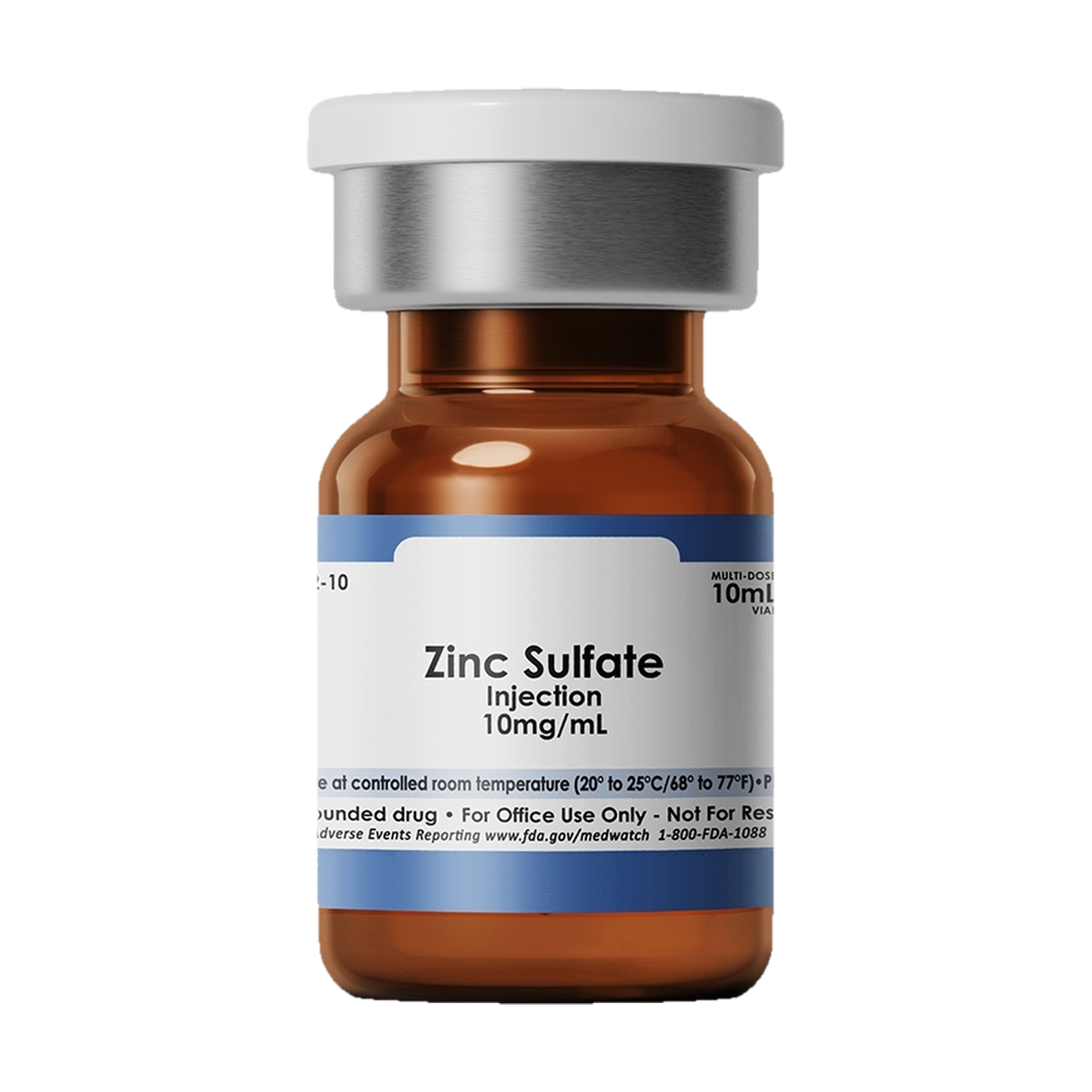
Zinc Sulfate Injection at 10mg/mL delivers this essential trace mineral directly into the bloodstream to support immune function, wound healing, skin health, and normal hormonal balance. A standard component of IV wellness protocols and Myers’ Cocktail formulations.

SHARE THIS PRODUCT:

Zinc Sulfate Injection: Essential Trace Mineral at 10mg/mL

Zinc is an essential trace mineral involved in over 300 enzymatic reactions throughout the body. Despite being required in relatively small amounts, zinc deficiency is common and has wide-ranging effects on immune function, wound healing, skin integrity, reproductive health, and hormonal balance. Injectable zinc sulfate at 10mg/mL delivers the mineral directly into the bloodstream, bypassing the absorption limitations of oral supplementation and providing immediate systemic availability in clinical settings.

Formula

SpecificationDetail
Active ingredientZinc Sulfate
Concentration10 mg/mL
RouteIV only
StorageControlled room temperature; protect from light

The Role of Zinc in the Body

Immune function: Zinc is essential to the development and function of immune cells, including T-lymphocytes, neutrophils, and natural killer cells. It also plays a role in the inflammatory response and antioxidant defense. Zinc deficiency is directly associated with impaired immune response and increased susceptibility to infection.

Wound healing: Zinc is required for collagen synthesis, cell proliferation, and tissue repair. It’s involved at every stage of the wound healing process, from the initial inflammatory response through to tissue remodeling. Injectable zinc is particularly relevant in post-surgical settings where nutritional status may be compromised.

Skin health: Zinc regulates sebum production, supports keratinocyte function, and has anti-inflammatory properties relevant to skin integrity. It’s one of the most studied minerals in dermatological health.

Hormonal and reproductive health: Zinc is a required cofactor in testosterone biosynthesis and plays a role in supporting normal reproductive function. In patients with zinc deficiency, supplementation supports the restoration of normal hormonal balance.

Enzymatic function: As a cofactor in over 300 enzymatic reactions, zinc supports DNA synthesis, protein production, and cell division throughout the body, making adequate zinc status foundational to overall metabolic health.

Who Is at Risk for Zinc Deficiency?

  • Patients with GI malabsorption conditions (Crohn’s disease, celiac disease, short bowel syndrome)
  • Post-bariatric surgery patients
  • Vegetarians and vegans (plant-based zinc is less bioavailable than animal-source zinc)
  • Elderly patients with reduced dietary intake and absorption
  • Patients with chronic liver disease or kidney disease
  • Those on prolonged parenteral nutrition or with significant dietary restriction
  • Patients on long-term high-dose zinc supplementation (paradoxically) may develop copper deficiency as a secondary effect

Clinical Applications

Zinc Sulfate Injection is commonly incorporated into:

  • IV therapy and wellness protocols: As a standalone injection or as a component of broader micronutrient IV programs
  • Myers’ Cocktail formulations: Zinc is a standard trace mineral component of Myers’ Cocktail and similar IV nutrition protocols
  • Post-surgical and wound healing support: Providing systemic zinc where oral intake or absorption is compromised
  • Immune support protocols: Particularly relevant during immune challenge periods or for patients with known deficiency
  • Hormone optimization protocols: Supporting zinc-dependent hormonal pathways in deficient patients

Benefits

  • Supports immune cell development and function
  • Supports wound healing and tissue repair via collagen synthesis
  • Supports healthy skin integrity and inflammatory regulation
  • Supports normal hormonal and reproductive function in zinc-deficient patients
  • Water-soluble and suitable for IV administration alongside other micronutrients in complex formulations
  • Supports over 300 enzymatic reactions involved in DNA synthesis, protein production, and cell division

Dosage

Dosage should be determined by the ordering provider based on the patient’s zinc levels, clinical presentation, and therapeutic goals. Consult current clinical guidelines and state prescribing requirements.

Precautions

Copper interaction: This is the most clinically important precaution for zinc supplementation. High-dose or prolonged zinc supplementation reduces copper absorption, which can lead to copper deficiency over time. Copper deficiency presents with anemia, neurological symptoms, and immune impairment. Monitor copper levels in patients on extended zinc protocols and consider copper co-supplementation where appropriate.

Drug interactions requiring review:

  • Antibiotics (particularly quinolones and tetracyclines): zinc can reduce absorption when taken simultaneously
  • Thiazide diuretics: may increase urinary zinc excretion, increasing deficiency risk with long-term use
  • Penicillamine and other chelating agents: may interact with zinc absorption and metabolism
  • Antiviral and immunosuppressive medications: full medication review required

Common side effects: Metallic taste during IV administration, mild nausea, and injection site irritation. These are generally transient and well-tolerated.

Contraindicated in: Known hypersensitivity or allergy to zinc sulfate or any components of the formulation.

As a compounded Rx product, Zinc Sulfate Injection has not been evaluated by the FDA for safety, efficacy, or quality. Administer only under the supervision of a licensed healthcare provider in accordance with current clinical and state regulatory guidelines.

Who It’s For

  • IV therapy and wellness clinics incorporating zinc as a standard component of micronutrient IV programs
  • Medical weight loss and bariatric practices addressing post-surgical nutritional deficiencies
  • Integrative and functional medicine providers supporting immune function, wound healing, and hormonal health
  • Practices offering Myers’ Cocktail or comprehensive IV nutrition formulations

Pairs Well With

Practices offering Zinc Sulfate Injection often combine it with Ascorbic Acid Injection, Glutathione Injection, B12 Injections, and Magnesium Chloride Injection as part of a comprehensive IV micronutrient and wellness protocol.

FAQs

Is a prescription required to order Zinc Sulfate Injection?
Yes. Zinc Sulfate Injection is a compounded Rx product dispensed exclusively to licensed healthcare providers and medical practices. It is not available for direct patient purchase.

What is the concentration and route of administration?
10mg/mL, for intravenous (IV) administration only.

What is the most important clinical consideration for extended zinc protocols?
High-dose or prolonged zinc supplementation can reduce copper absorption and lead to copper deficiency over time. Monitor copper levels in patients on extended zinc protocols and consider co-supplementation where clinically appropriate.

What other injectables pair well with Zinc Sulfate?
Providers often combine Zinc Sulfate with Ascorbic Acid, Glutathione, B12, and Magnesium Chloride as part of a comprehensive IV micronutrient and immune support protocol.

 

This is a compounded medication. Compounded drugs are not FDA-approved and have not been evaluated by the FDA for safety, efficacy, or quality. This product is available by prescription only and is intended for use by or on the order of a licensed healthcare provider.

Legere: Your Partner in Success

Helpful In-Depth Research and Information

Top Quality Health Supplements Branded for Your Practice

Expert Guidance to help You Grow Your Medical Practice

Ready to Start Growing Your Practice? Let’s Chat!

Schedule a no obligation/no-pressure call to quickly increase your weight loss clinic’s revenue.