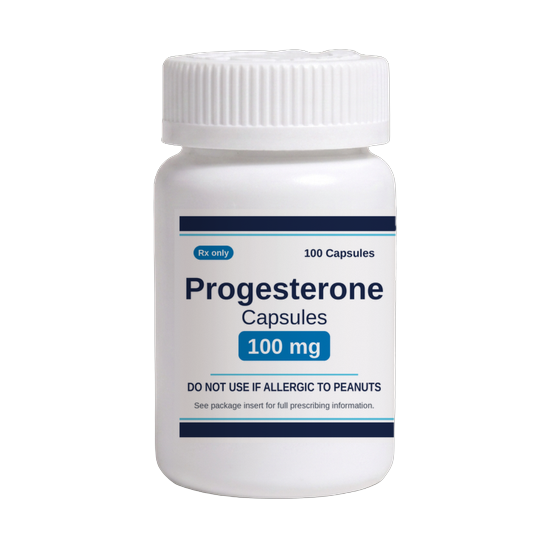
Progesterone 100mg micronized capsules — generic Prometrium for BHRT, hormone optimization, and women’s health practices. Bioidentical oral progestogen for menopause hormone protocols and endometrial protection.
Progesterone 100mg micronized capsules — generic Prometrium — are an oral bioidentical progestogen used in menopause hormone therapy, BHRT protocols, and secondary amenorrhea treatment. Unlike synthetic progestins such as medroxyprogesterone acetate (MPA), micronized progesterone is chemically identical to the progesterone the body produces naturally. That distinction matters in BHRT practice, where patients and providers increasingly prefer bioidentical hormones over synthetic alternatives. Available in 100mg capsules. Rx only.
| Specification | Detail |
|---|---|
| Active ingredient | Progesterone USP (micronized) |
| Strength | 100 mg |
| Dosage form | Oral capsule |
| Best time to take | Bedtime — causes mild drowsiness |
| Storage | Room temperature; away from heat and moisture |
| Prescription status | Rx only |
Contact our team for current availability, volume pricing, and ordering details.
To get pricing, check availability, or place an order, click the Request a Quote button or contact our team directly. A valid medical or pharmacy license is required to purchase prescription and injectable products.
This is one of the most common questions in BHRT practice — and one of the most commercially significant distinctions a practice can communicate clearly.
| Micronized Progesterone (This product) | Synthetic Progestins (e.g., MPA) | |
|---|---|---|
| Chemical identity | Identical to the body’s own progesterone | Modified analogs — not the same molecule |
| Receptor activity | Progesterone receptors only | May also bind androgen, glucocorticoid, or other hormone receptors |
| WHI study | Not the agent studied — MPA was used in the WHI | MPA arm associated with increased cardiovascular and breast cancer risk |
| Sleep effect | Mild sedation — supports sleep when taken at bedtime | No sedating effect |
| Bioidentical | Yes | No |
| Patient preference | Preferred by patients seeking natural or bioidentical HRT | Standard in conventional HRT regimens |
The WHI data that drove widespread concern about combined hormone therapy used conjugated equine estrogen plus MPA — not bioidentical progesterone. Many BHRT providers and patients distinguish between the two on this basis, and practices that can articulate this distinction clearly are better positioned to serve the growing BHRT market.
Progesterone acts on progesterone receptors in the uterus, breast, brain, and cardiovascular system. Its primary clinical function in hormone therapy is transforming the estrogen-stimulated uterine lining from a proliferative to a secretory state — protecting against the endometrial hyperplasia that unopposed estrogen would otherwise cause. This is the core reason any woman with an intact uterus who is on estrogen therapy also needs a progestogen.
Micronized progesterone also acts on GABA receptors in the brain — the same pathway that produces mild sedation from certain sleep medications. This neurosteroid effect is why progesterone capsules are taken at bedtime. For many women, improved sleep is one of the most appreciated effects of progesterone therapy, particularly during perimenopause when sleep disruption is common.
| Indication | Standard Dose |
|---|---|
| Endometrial protection (continuous) | 100mg daily at bedtime |
| Endometrial protection (cyclic) | 200mg daily at bedtime for 12 days per cycle |
| Secondary amenorrhea | 400mg daily at bedtime for 10 days |
| Perimenopause symptom management | Varies by protocol and provider; 100-200mg typical |
All dosing follows the prescribing provider’s clinical protocol.
BHRT and hormone optimization practices: Progesterone 100mg is a foundational component of bioidentical hormone replacement protocols for perimenopausal and postmenopausal women. Its bioidentical status, sleep-supportive effect, and favorable patient perception make it the preferred progestogen in BHRT-focused practices.
Women’s health and OB-GYN practices: Standard endometrial protection for postmenopausal women on estrogen therapy. Also used in perimenopause for cycle regulation, sleep support, and heavy bleeding management when progesterone insufficiency is part of the clinical picture.
Functional and integrative medicine practices: Progesterone declines earlier than estrogen in many women, contributing to sleep disruption, anxiety, irregular cycles, and heavy bleeding before estrogen decline becomes significant. Functional medicine practices addressing perimenopause often start here.
Anti-aging and longevity practices: Women’s hormone optimization programs that include progesterone as part of a comprehensive hormonal balance protocol alongside estrogen and other hormone support.
DHEA 25mg Capsules — Adrenal hormone precursor support for practices building a comprehensive women’s hormone optimization protocol. DHEA supports adrenal androgen production that declines alongside ovarian hormone production in perimenopause and menopause.
DIM (Diindolylmethane — Estrogen metabolism support for women on hormone replacement protocols. DIM supports healthy phase II estrogen clearance, complementing progesterone’s role in balancing estrogen at the receptor level.
Peanut allergy: Most progesterone capsule formulations contain peanut oil. Contraindicated in patients with peanut hypersensitivity. Confirm the current product’s excipients before prescribing.
Sedation: Progesterone causes mild drowsiness through its effect on GABA receptors. Patients should take it at bedtime and avoid driving or operating machinery until they know how it affects them.
Women with an intact uterus: Any woman with a uterus who is taking estrogen therapy requires a progestogen to prevent endometrial hyperplasia. Women who have had a hysterectomy do not need it for endometrial protection, though progesterone may still be prescribed for sleep support or other reasons.
Cardiovascular and cancer risk labeling: Combined estrogen-progestogen therapy carries class labeling for increased risk of cardiovascular events, breast cancer, and dementia in women over 65. These warnings are based primarily on MPA data from the WHI, not micronized progesterone. Providers should discuss the relevant evidence and individual risk factors with patients.
Liver disease: Progesterone is processed by the liver. Use with caution in patients with hepatic impairment.
Depression: Some patients report mood changes on progesterone. Monitor in patients with a history of depression.
For use by or on the order of a licensed healthcare provider.
How do I order, and what quantities are available?
Contact our team directly to place an order or request a quote. We supply a range of quantities depending on the product — reach out for current availability, lead times, and volume pricing. A valid medical license is required to purchase prescription and injectable products.
What is the difference between micronized progesterone and synthetic progestins?
Micronized progesterone is chemically identical to the progesterone the body produces — the same molecule. Synthetic progestins like MPA are modified analogs that bind progesterone receptors but also interact with other hormone receptors, which can produce different effects and side effects. The WHI data that raised concerns about combined HRT used MPA, not micronized progesterone. Many BHRT providers and patients choose micronized progesterone specifically because of this distinction.
Why is progesterone taken at bedtime?
Micronized progesterone acts on GABA receptors in the brain, producing mild sedation — a neurosteroid effect that synthetic progestins don’t share. Taking it at bedtime turns this into a benefit: improved sleep is one of the most consistently reported positive effects in women on progesterone therapy, especially during perimenopause when sleep disruption is common.
Do all women on hormone therapy need progesterone?
Women with an intact uterus who are taking estrogen therapy need a progestogen to prevent endometrial hyperplasia. Women who have had a hysterectomy do not need it for that purpose — though some providers prescribe it for sleep support or neurological benefit regardless of uterine status.
Is a prescription required?
Yes. Progesterone capsules are Rx only, available exclusively to licensed healthcare providers and medical practices.
For use by or on the order of a licensed healthcare provider.

Schedule a no obligation/no-pressure call to quickly increase your weight loss clinic’s revenue.