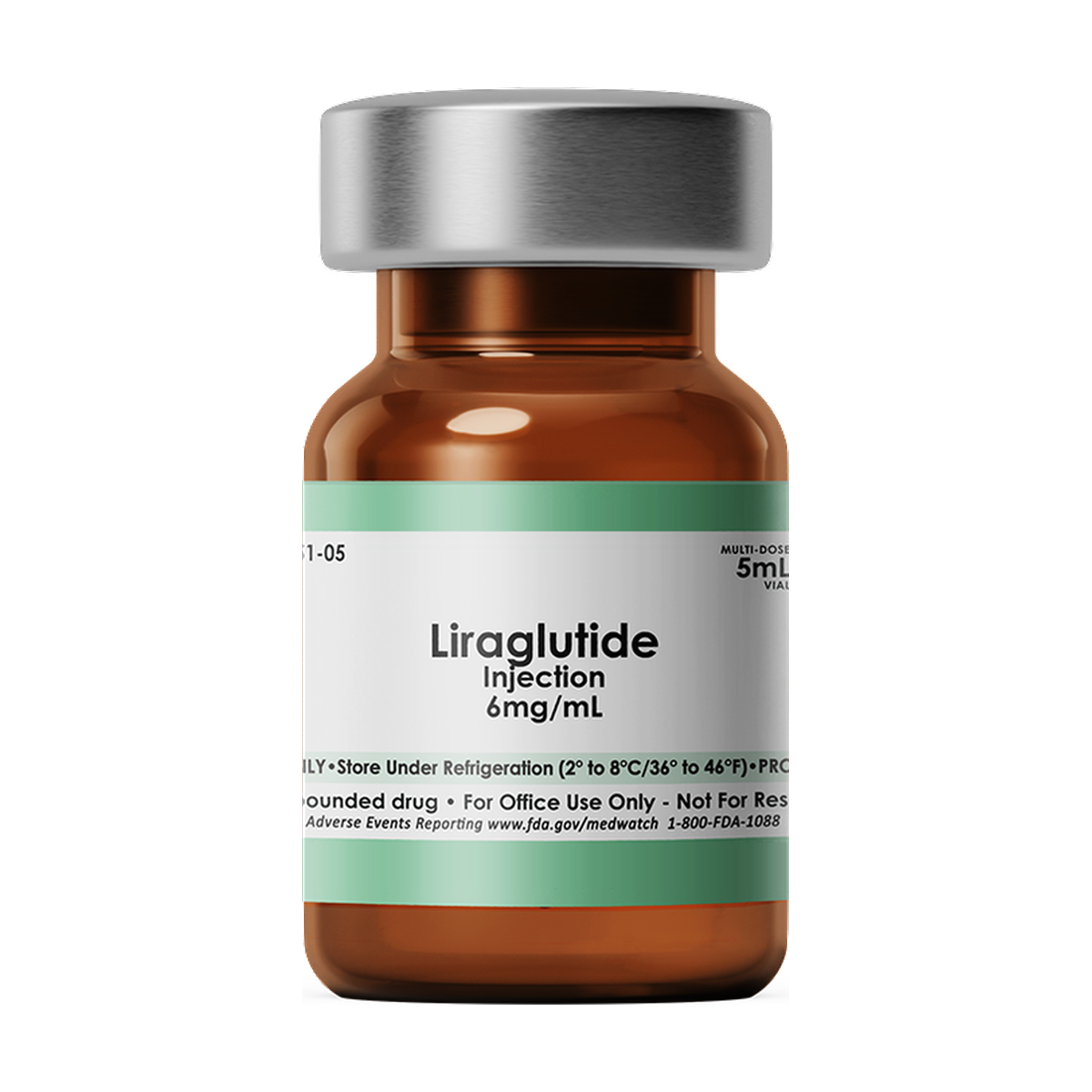
Compounded Liraglutide at 6mg/mL is a GLP-1 receptor agonist that activates natural GLP-1 pathways to support insulin secretion, reduce glucagon levels, and slow gastric emptying.
Liraglutide is a synthetic glucagon-like peptide-1 (GLP-1) receptor agonist that activates the body’s natural GLP-1 pathways — stimulating insulin secretion in response to elevated blood glucose, suppressing glucagon release, and slowing gastric emptying to reduce post-meal glucose spikes and support satiety. GLP-1 receptor agonists have become one of the most significant developments in metabolic medicine over the past decade, and Liraglutide is among the most established compounds in this class.
| Specification | Detail |
|---|---|
| Active ingredient | Liraglutide |
| Concentration | 6 mg/mL |
| Route | Subcutaneous (SQ) only |
| Storage | Refrigerate (36°–46°F); protect from light |
Liraglutide activates GLP-1 receptors throughout the body — in the pancreas, brain, and GI tract — through three primary mechanisms:
GLP-1-mediated insulin stimulation: Activates pancreatic beta cells to increase insulin secretion in a glucose-dependent manner — insulin release increases when blood glucose is elevated and decreases when it normalizes, reducing hypoglycemia risk compared to non-glucose-dependent insulin secretagogues.
GLP-1-mediated glucagon suppression: Reduces glucagon release from pancreatic alpha cells, decreasing hepatic glucose output and supporting overall glucose regulation throughout the day.
Gastric emptying delay: The GLP-1 receptor in the GI tract slows gastric emptying — reducing post-meal glucose spikes and supporting a sustained feeling of fullness that may reduce caloric intake over time.
Established GLP-1 mechanism: Liraglutide is one of the most studied GLP-1 receptor agonists in clinical use, with a well-characterized mechanism and a clinical profile that gives providers a strong evidence base for patient conversations.
Once-daily subcutaneous dosing: The SQ administration format is familiar to practices already managing injectable protocols and integrates naturally into existing GLP-1 workflows.
503B sourced: Produced under cGMP conditions at an FDA-registered 503B outsourcing facility — meeting the quality and sterility standards practices expect from compounded injectable products.
GLP-1 protocol complement: For practices already offering GLP-1 therapy, Liraglutide expands the options available to patients where the specific GLP-1 receptor agonist profile — including its cardiovascular and metabolic data — is clinically relevant.
Compounded Liraglutide is prescribed in the context of:
D.N.S. (Doctor’s Nutritional Support) — Gymnema Sylvestre, Chromium, and Vanadyl Sulfate supporting healthy glucose metabolism as a complementary oral supplement alongside injectable GLP-1 protocols.
Ondansetron Injection — Nausea is the most commonly reported side effect of GLP-1 receptor agonists. Standalone Ondansetron injectable provides on-demand antiemetic support for patients managing GLP-1 therapy-related nausea.
Contraindications — do not use in patients with:
Use with caution in patients with:
Common side effects: Nausea, vomiting, diarrhea, constipation, decreased appetite, abdominal discomfort, fatigue, changes in heart rate. GI side effects are most common during initiation and dose escalation and typically diminish over time.
Drug interactions: Full medication review required before initiating. Liraglutide’s gastric-emptying effect may alter the absorption timing and bioavailability of orally administered medications.
As a compounded Rx product, Liraglutide Injection has not been evaluated by the FDA for safety, efficacy, or quality. Administer only under the supervision of a licensed healthcare provider in accordance with current clinical and state regulatory guidelines.
Is a prescription required to order Liraglutide Injection?
Yes. Compounded Liraglutide is a prescription medication dispensed exclusively to licensed healthcare providers and medical practices. It is not available for direct patient purchase.
What is the concentration and route?
6mg/mL, for subcutaneous (SQ) administration only. Refrigerate at 36°–46°F and protect from light.
Why is compounded Liraglutide available?
This compounded formulation is produced by an FDA-registered 503B outsourcing facility specifically to address FDA-identified drug shortages of commercially manufactured liraglutide. Availability is contingent on current shortage status.
What are the most important contraindications?
Personal or family history of medullary thyroid carcinoma or Multiple Endocrine Neoplasia syndrome type 2, known hypersensitivity to liraglutide, and history of pancreatitis. Full patient history review is required before initiating.
This is a compounded medication. Compounded drugs are not FDA-approved and have not been evaluated by the FDA for safety, efficacy, or quality. This product is available by prescription only and is intended for use by or on the order of a licensed healthcare provider.

Schedule a no obligation/no-pressure call to quickly increase your weight loss clinic’s revenue.