U.S. Obesity Rate Could Reach 50% by 2030.

The U.S. obesity rate has steadily increased for decades, and new projections suggest nearly half of American adults could have obesity by 2030. Researchers warn this trend may significantly increase rates of type 2 diabetes, cardiovascular disease, metabolic dysfunction, and healthcare spending nationwide. Emerging treatments like GLP-1 receptor agonists may help slow the trend, but obesity remains one of the largest public health challenges in the United States.

In 2019, research published in the New England Journal of Medicine had estimated that by the year 2030 the obesity rate will reach 48.9%, which means that nearly 1 in 2 adults will be obese.

Current U.S. Obesity Statistics

According to recent CDC and NHANES data, more than 40% of U.S. adults currently meet the criteria for obesity, representing more than 100 million Americans. Severe obesity rates have also continued rising over the past decade, creating growing concerns about long-term healthcare costs and chronic disease prevalence.

How Obesity Rates Have Changed Over Time

Adult obesity rates in the United States have risen dramatically over the last several decades despite increased awareness of nutrition, fitness, and weight management strategies.

In 1976 the obesity rate was 15% among adults. Despite increasing knowledge of nutrition and dieting, the obesity rate has been steadily increasing. In 2019, when the research was published,  In 2019, 19 states had adult obesity rates at or above 35%. By 2024, this number increased to over 22 states. The CDC’s most recent measured data (NHANES 2021–2023) show adult obesity at 40.3%, affecting over 100 million Americans.

If trends continue, that number will grow to 164 million.

“The findings suggest with high predictive accuracy that by 2030 nearly 1 in 2 adults will have obesity (48.9%; 95% confidence interval [CI], 47.7 to 50.1), and the prevalence will be higher than 50% in 29 states and not below 35% in any state. Nearly 1 in 4 adults is projected to have severe obesity by 2030 (24.2%; 95% CI, 22.9 to 25.5), and the prevalence will be higher than 25% in 25 states.”²
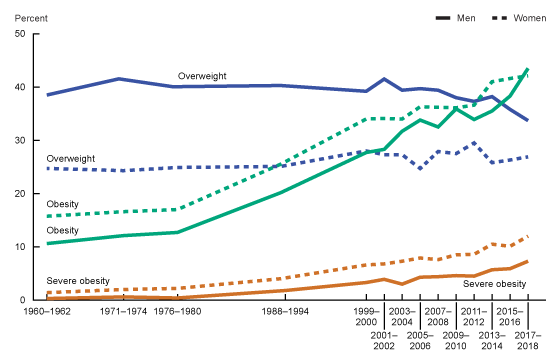
Obesity Rates Over Time
Will emerging treatments like GLP-1 agonists going to cause obesity rates to plateau or will the trend continue?

That could result in increased medical costs that exceed $100 Billion (according to CDC figures the medical cost for people with obesity is $1,429 higher than those of normal weight). Obesity continues to drive substantial costs, with estimates now exceeding $150–200 billion annually in direct medical expenses.

An increase in the obesity rate would also mean an increase in obesity-related conditions such as heart disease, stroke, type 2 diabetes, and certain types of cancer.


Obesity Rates by State

Obesity Rates by State
In 2019 no state had an obesity rate below 20%. As of 2024, no state is below 25%. Colorado has the lowest rate of 25.0%

Obesity prevalence varies significantly across the United States. Southern and Midwestern states continue to report some of the highest obesity rates, while states such as Colorado historically report lower prevalence rates. Researchers predict that by 2030, obesity rates could exceed 50% in nearly 30 states.

When it comes to losing weight, most people have trouble succeeding on their own. Experts agree that patients have the best success when doctors encourage participation in a specific weight loss program. A year-long study of 134 participants found that patients lost most weight when “health care providers gave specific advice that reinforced the comprehensive weight-loss program.”³ Experts continue to emphasize physician-guided programs; emerging treatments like GLP-1 agonists have shown superior results in clinical trials and real-world use.

Learn How You Can Start Your Own All-Natural Weight Loss Program Today!


Sources:

1. CDC. (2026). Adult Obesity Facts. Retrieved from: https://www.cdc.gov/obesity/data/adult.html
2. Ward, Z. et al. (2019). Projected U.S. State-Level Prevalence of Adult Obesity and Severe Obesity. NEJM. Retrieved from: https://www.nejm.org/doi/full/10.1056/NEJMsa1909301
3. Duke University. (2019, March 20). Generic advice doesn’t help patients drop pounds: Patients shed more weight when doctors give specific tips, study finds. ScienceDaily. Retrieved December 19, 2019 from www.sciencedaily.com/releases/2019/03/190320153929.htm
The Harvard Gazette. Close to half of U.S. population projected to have obesity by 2030

Related Posts

Ready to Start Growing Your Practice? Let’s Chat!

To get started, please fill out this quick form and let us know more about your business.